Nutmeg (Jaiphal)
Nutmeg is the seed from the same fruit that produces mace — they share aromatic compounds but have different characters and uses. Nutmeg is denser, warmer, woodier. It's a background spice in Indian cooking — used sparingly in spice blends and Mughlai dishes where it fills in the warm middle register without announcing itself.
What it is
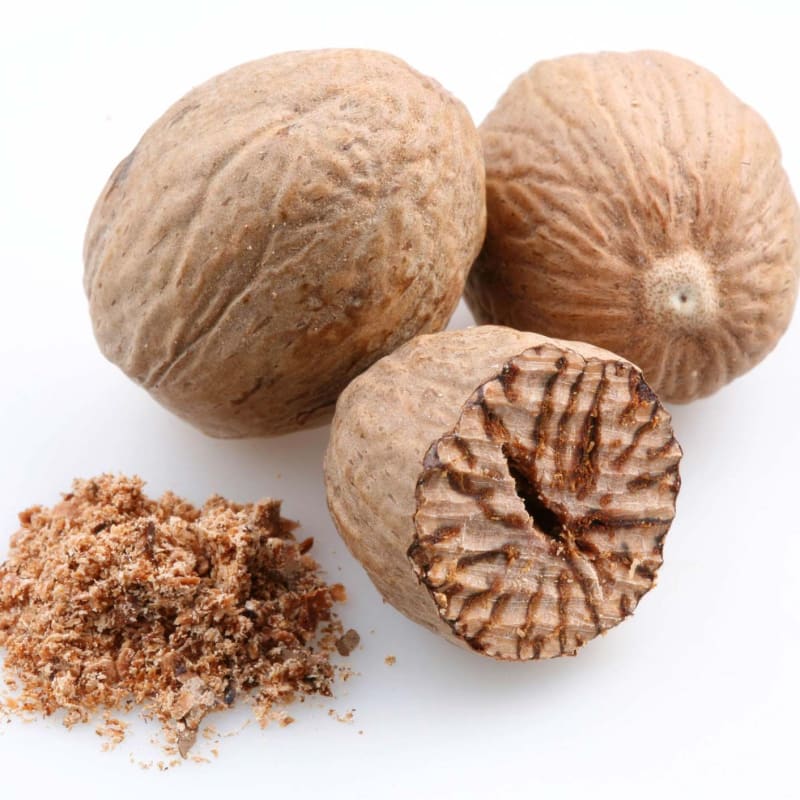
The dried seed of Myristica fragrans, a tree native to the Banda Islands (Indonesia). The fruit splits when ripe, revealing the seed (nutmeg) wrapped in a bright red lacy covering (mace — a separate spice). The seed is dried inside its hard shell, then the shell is removed. The hard, oval, brownish seed is what you grate or grind.
See also: Mace — the lacy aril that surrounds the same seed. More delicate and floral than nutmeg.
Flavour & Aroma
Freshly grated: Warm, sweet, woody, with a mild spicy complexity. Rich and aromatic. The character is more intense and dense than mace.
Ground (pre-ground): Loses volatile aromatics quickly after grinding. Pre-ground nutmeg from a jar open for months is noticeably weaker than freshly grated. The difference is dramatic.
Too much: Nutmeg turns medicinal and overpowering quickly. The moment you can distinctly identify "nutmeg" in a savory dish, you've used too much. It should add depth, not flavor.
When to add it
- Freshly grated as a finisher: The most aromatic use. Grate 3-4 times over biryani, korma, or rich dal just before serving. The volatile top notes are at their peak immediately after grating.
- Ground into spice blends: Used in garam masala and biryani masala. Because quantities are small (1/4 nutmeg per batch), pre-ground works here.
- Mid-cook in slow-cooked meat dishes: Nihari, haleem, some kormas. Mellows and integrates with long cooking — the raw warmth becomes a background note.
- In cream and ghee-based gravies: Added toward the end, nutmeg's sweetness complements fat beautifully.
What it contributes to a dish
Warm, sweet depth in the middle register. Nutmeg bridges the gap between the earthy base notes (cumin, coriander) and the sharp top notes (cardamom, pepper). It rounds out a spice blend, making it feel complete. You notice its absence as a thinness in the blend rather than a missing specific flavor.
Most prominent in Mughlai cooking — korma, shahi paneer, nihari, biryani — where it's a more intentional flavor. In everyday cooking it appears in small amounts in garam masala.
Works well with
- Mace — the two together are more complex than either alone. Mace provides the delicate top note; nutmeg the warmer body.
- Cardamom and cinnamon — warm sweet aromatics that work together in the upper register of spice blends.
- Cloves — nutmeg's sweetness softens cloves' intensity.
- Cream and ghee — fat carries nutmeg's volatile oils beautifully.
- Lamb — classic pairing in both Indian and European cooking.
In blends
| Blend | Role |
|---|---|
| Garam masala | Present in some versions — warm sweet depth |
| Biryani masala | Background warmth |
| Some korma masalas | Richness |
| Nihari masala | Background warmth |
Forms & Storage
Whole nutmeg The best form. Keeps for 2-3 years. Grate fresh as needed — a microplane grater works perfectly. The difference between freshly grated and pre-ground is dramatic.
Ground nutmeg Loses potency quickly — 3-6 months after opening. Buy in small quantities and replace regularly. If it smells faint and woody rather than warm and spiced, replace it.
Storage: Whole: 2-3 years in an airtight jar. Ground: 3-6 months.
Nutmeg vs Mace
| Nutmeg | Mace | |
|---|---|---|
| Part of fruit | Seed | Lacy aril surrounding the seed |
| Character | Denser, warmer, woodier | Lighter, more floral, more delicate |
| Best use | Finishing grate, blends, slow cooking | Tempering, delicate dishes, some blends |
| Interchangeable? | Yes — use half the quantity of mace if substituting nutmeg |
Notes
- Quantity discipline: 1/4 tsp ground or 3-4 gratings of fresh nutmeg is enough for a dish serving 4. More becomes medicinal.
- Toxicity: large quantities (multiple tablespoons) of nutmeg are toxic. Culinary amounts are completely safe.
- The grater: a microplane grater is ideal. The traditional Indian tool is a small wooden grater (jaiphal ghisni).
Added Aug 31, 2026 · Updated Aug 31, 2026