Mace (Javitri)
Mace is the lacy red covering (aril) that wraps around a nutmeg seed inside the same fruit. It shares nutmeg's aromatic compounds but is distinctly more delicate, more floral, and more citrusy. In Indian cooking it's used whole in tempering for biryani and slow-cooked dishes, or ground into some spice blends. It's the lighter, more refined version of nutmeg's character.
What it is
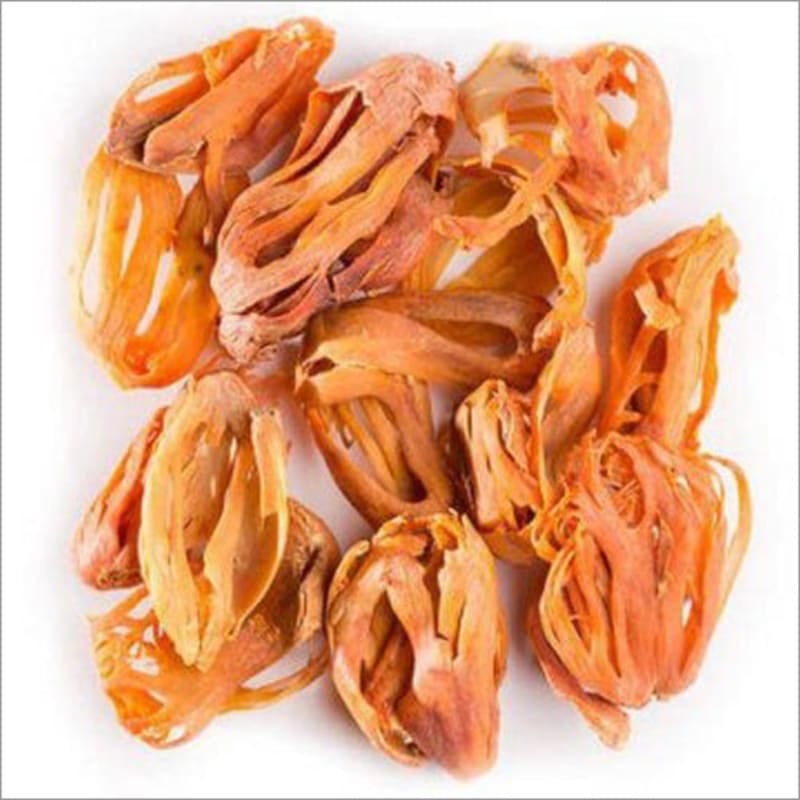
The dried aril of Myristica fragrans — the same tree that produces nutmeg. The bright red lacy covering (called an aril) is removed from around the nutmeg seed, dried, and sold as mace. It dries to a pale orange-yellow color. Sold as whole "blades" (the flat, lacy dried pieces) or ground.
See also: Nutmeg — the seed inside the same fruit. Denser and warmer than mace.
Flavour & Aroma
Whole blades: More delicate and floral than nutmeg. Same warm sweet character but lighter, with a slightly more citrusy, floral top note. More refined in a way — the same family of flavor but elevated.
Ground: Concentrated and aromatic. Loses potency quickly after grinding.
In oil: Blooms gently and infuses the fat with a delicate warmth. Less intense than cloves or cardamom — a softer addition to the tempering.
The distinction from nutmeg: mace is lighter and more floral; nutmeg is denser and woodier. Mace contributes to the top of the aromatic register; nutmeg fills the middle.
When to add it
- Whole blade in hot oil (tempering): Add with other whole spices for biryani and some Mughlai dishes. Blooms gently in 30 seconds. The whole blade can be removed before serving or left in (push to the side when eating).
- Whole in slow-cooked dishes: Biryani, nihari, some kormas. Added early, mellows with long cooking. Remove before serving.
- Ground in spice blends: Used in garam masala and biryani masala. Provides the delicate top note in blends where nutmeg handles the body.
- As a finishing note: A small amount ground over a rich dish at the end — delicate enough to add aroma without dominating.
What it contributes to a dish
Delicate floral warmth and complexity in the top register. Mace is what makes biryani smell elegant and complex rather than just spiced. Its contribution is most noticeable in the aroma of a finished dish — the subtle floral warmth that rises when you lift the lid.
In Mughlai cooking it's a signature spice — korma, shahi dishes, and premium biryanis often feature mace deliberately rather than as part of a generic blend.
Works well with
- Nutmeg — the two together create the full spectrum of the Myristica aromatic character. Mace for the top note, nutmeg for the body.
- Green cardamom — both floral and delicate; they work together in the upper aromatic register.
- Cinnamon — mace's floral note complements cinnamon's sweet warmth.
- Cream and ghee — fat carries mace's volatile oils; essential in korma and rich gravies.
- Saffron — both are expensive, both are delicate aromatics used in premium Mughlai preparations.
In blends
| Blend | Role |
|---|---|
| Garam masala | Present in more refined versions — floral top note |
| Biryani masala | More prominent than in garam masala |
| Some korma masalas | Delicate richness |
| Some nihari masalas | Background warmth |
Forms & Storage
Whole mace blades The best form. Flat, lacy, pale orange-yellow pieces. Used whole in tempering and slow cooking. Grind fresh when needed for blends.
Ground mace Less common than ground nutmeg. Loses potency quickly — grind from blades as needed. Pre-ground mace from an old jar is significantly weaker than freshly ground.
Storage: Whole blades: 1-2 years in an airtight jar. Ground: 3-4 months. Mace loses its delicate floral notes faster than nutmeg because the top notes are more volatile.
Mace vs Nutmeg
| Mace | Nutmeg | |
|---|---|---|
| Part of fruit | Lacy aril surrounding the seed | The seed itself |
| Character | Lighter, floral, citrusy, delicate | Denser, warmer, woodier |
| Form used | Whole blades or ground | Whole (grated) or ground |
| Best use | Tempering, delicate dishes, biryani | Finishing grate, blends, slow cooking |
| Interchangeable? | Yes — use slightly more mace if substituting for nutmeg |
Notes
- Expense: mace is typically more expensive than nutmeg because there's less of it per fruit. A little goes a long way.
- Colour: fresh mace is bright red; dried mace is pale orange-yellow. This is normal and correct — the color change happens during drying.
- Identifying whole mace: the flat, irregular lacy pieces look unlike any other spice. Once you know what to look for, they're unmistakable.
Added Aug 31, 2026 · Updated Aug 31, 2026