Mustard Seeds (Rai / Sarson)
One of the foundation spices of South Indian and Bengali cooking. Mustard seeds are used almost exclusively in tempering — dropped into hot oil to bloom and splutter. That spluttering sound and the smell that follows is one of the defining moments of starting an Indian dish.
What it is
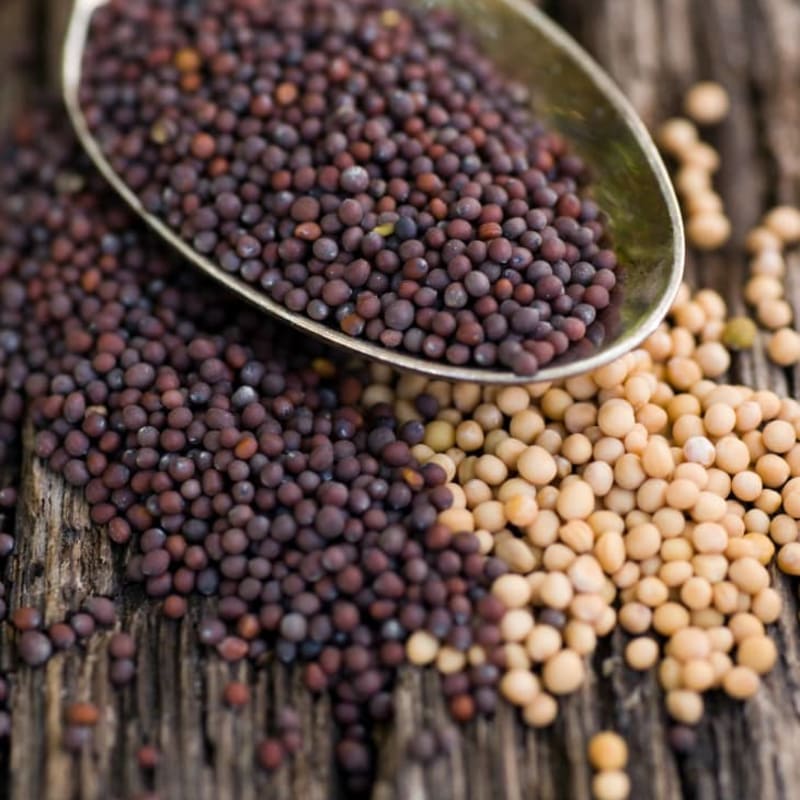
The seeds of the mustard plant (Brassica species). Three main varieties used in Indian cooking:
- Black mustard seeds (rai): Small, dark, pungent. Standard for South Indian tempering and Bengali cuisine. Most common in Indian recipes.
- Brown mustard seeds: Similar to black, slightly milder. Often labelled interchangeably with black in Indian cooking.
- Yellow mustard seeds: Larger, milder, less pungent. Used in some North Indian pickles. Not used for tempering.
Unless a recipe specifies otherwise, "mustard seeds" in Indian cooking means black or brown.
Flavour & Aroma
Raw/uncooked: Sharp, pungent, slightly bitter. Not pleasant to eat raw.
Bloomed in oil: Nutty, warm, with a mild pungency. The harsh raw character disappears entirely once they splutter in hot oil. The aroma that rises when they hit the oil is distinctly "Indian cooking starting" — sharp, nutty, aromatic.
The transformation: mustard seeds are one of the spices where blooming changes the character completely. Raw = harsh. Bloomed = nutty and warm.
When to add it
- First into hot oil — always: Mustard seeds go in before any other ingredient, including curry leaves. The oil must be hot enough for them to splutter within 15-20 seconds. If they don't splutter, the oil isn't hot enough.
- Cover the pan: When mustard seeds hit hot oil they pop and fly. Keep a lid ready or partially cover the pan.
- Wait for the spluttering to stop: Once the seeds have spluttered and mostly stopped popping, add the next ingredient (curry leaves, dried red chilli, or aromatics). Don't rush.
- Never in cold oil: Mustard seeds need high heat to bloom. Starting in cold oil and bringing to temperature gives a different, less pleasant result.
What it contributes to a dish
The nutty, pungent opening note of a tempering. It sets the aromatic foundation before anything else goes in. Without it, South Indian dishes in particular taste flat and incomplete — the absence is obvious.
It also adds texture — the small bloomed seeds are pleasant to eat in the finished dish, providing a subtle crunch and occasional burst of flavor.
Works well with
- Curry leaves — the classic pairing. Mustard seeds splutter first, curry leaves go in immediately after and crackle. Together they define the base of most South Indian tadka.
- Dried red chillies — added with or just after the mustard seeds for heat in the oil.
- Cumin seeds — sometimes used together in North Indian tadka, though South Indian cooking typically uses mustard alone or with curry leaves.
- Asafoetida (hing) — small pinch added after mustard seeds in many dal tadkas.
- Urad dal — often added with mustard seeds in South Indian tempering; it crisps and turns golden in the oil.
In blends
Mustard seeds rarely appear ground in Indian spice blends (unlike in Western mustard or South Asian pickles). Their value is in tempering, not in blends.
| Context | Role |
|---|---|
| South Indian tadka | Always the first ingredient |
| Bengali panch phoron | One of the five whole spices bloomed together |
| Pickles (achar) | Whole or ground, provides pungency and preservation |
| Raita seasoning | Bloomed with curry leaves and red chilli |
Forms & Storage
Whole seeds (standard) The only form used for tempering. Buy black or brown mustard seeds specifically — yellow mustard seeds are too large and mild for Indian cooking.
Ground mustard powder Used in some pickle recipes and as a flavor note in a few North Indian dishes. Much less common than whole seeds in Indian cooking. Ground mustard has a very different character — sharp and intensely pungent.
Should you use whole vs ground? For any recipe that involves tempering — always whole. Ground mustard in a tadka loses the point entirely.
Storage: Whole mustard seeds keep well — 1-2 years in an airtight jar. They don't lose potency quickly compared to most spices. Ground mustard powder: 6 months.
Black vs Brown vs Yellow — does color matter?
| Colour | Size | Heat | Primary use |
|---|---|---|---|
| Black (rai) | Smallest | Most pungent | South Indian tempering, Bengali cooking |
| Brown | Similar to black | Slightly milder | North Indian cooking, often labelled same as black |
| Yellow | Larger | Mildest | North Indian pickles (achar), some Western mustard sauces |
For Indian cooking: black and brown are interchangeable and are what most recipes mean by "mustard seeds." Yellow mustard seeds are too large and mild for tempering — they won't give the same result.
The pungency difference: raw, black > brown > yellow. Once bloomed in oil, the difference narrows significantly — all three lose their harsh raw character. For tempering, either black or brown works.
Notes
- Oil temperature test: drop one seed into the oil. If it splutters within 5 seconds, the oil is ready. If it sits quietly, wait longer.
- The spluttering sound: when mustard seeds are properly bloomed, you hear a rapid popping sound for 15-20 seconds. This is the water inside the seeds vaporising. When it stops, the seeds are done.
- Burning: if the seeds go dark brown-black and start smoking, the oil was too hot or you waited too long. They become intensely bitter when burnt. Start again.
Added Aug 31, 2026 · Updated Aug 31, 2026