Kasoori Methi (Dried Fenugreek Leaves)
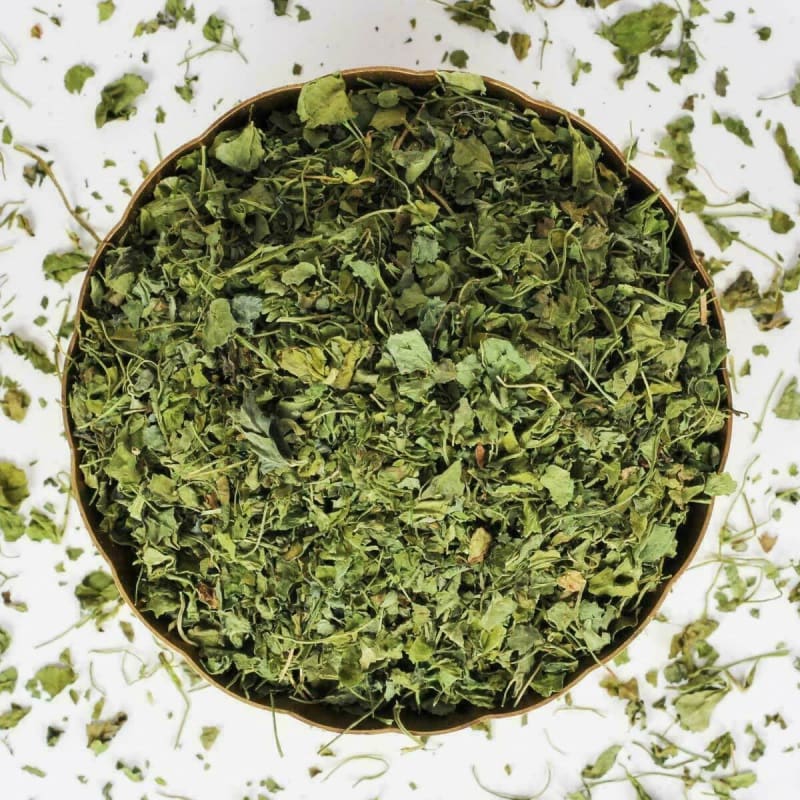
Kasoori methi is dried fenugreek leaves — the leaf of the same plant whose seeds are used as a spice. The leaves have a completely different character from the seeds: bitter but pleasantly so, with a distinctive aroma that defines a specific style of North Indian cooking. It's a finishing herb, not a base spice.
What it is
Dried leaves of Trigonella foenum-graecum (fenugreek). Named after Kasur, a city in Punjab (now Pakistan) historically known for growing fenugreek. The leaves are harvested when the plant is young, then dried. They're used primarily in North Indian and Punjabi cooking — the dried form is kasoori methi; the fresh leaves are methi.
Flavour & Aroma
Dried (kasoori methi): Distinctly bitter, with a complex savory aroma — slightly maple-like (both fenugreek and maple contain sotolone), earthy, and with a flavor that's hard to describe but immediately recognizable once you've smelled it. Pleasantly bitter rather than harsh.
When rubbed between palms before adding: The standard technique. Crushing kasoori methi between your palms activates and releases more of its volatile oils. Always do this — it makes a noticeable difference.
Fresh methi leaves: More vibrant, more bitter, more aromatic. A different (better for some applications) version of the same flavor. Not always available.
The character: kasoori methi adds a bittersweet complexity that's particularly associated with restaurant-style North Indian cooking — butter chicken, paneer dishes, and rich gravies. It's part of what makes those dishes smell like restaurant food.
When to add it
- At the end of cooking — always: Kasoori methi is a finishing ingredient. Add in the last 2-3 minutes of cooking, stir through, then serve. Adding it too early dissipates its aroma.
- Rub between palms first: Before adding to the dish, rub the dried leaves between your palms over the pan. This crushes them slightly and releases more flavor.
- In marinades: Add to chicken tikka, paneer marinades. The leaves mellow during cooking while leaving their characteristic note.
- Never as a tempering spice: Unlike most spices, kasoori methi is never bloomed in oil at the start. It's always a finisher.
What it contributes to a dish
Bittersweet complexity and the "restaurant" aroma. Kasoori methi is what gives many restaurant-style North Indian dishes their characteristic smell and that slightly bitter, complex aftertaste that makes you want another bite. It's particularly effective in cream- or tomato-based gravies where its bitterness cuts through richness.
Without it, dishes like butter chicken, saag paneer, and dal makhani taste perfectly good but lack a layer of complexity. With it, they taste like the version you remember from a good Indian restaurant.
Works well with
- Cream and butter-based gravies — the bitterness contrasts beautifully with fat.
- Tomato-based dishes — bitter cuts through tomato acidity and sweetness.
- Paneer — kasoori methi and paneer are one of the classic pairings in Indian cooking.
- Chicken — especially in tikka masala and butter chicken.
- Garam masala — adding both together at the finish of a dish creates the quintessential North Indian restaurant flavor.
In blends
Kasoori methi is almost never ground into dry spice blends — it's always used as a finishing herb. Some restaurant spice mixes include it, but home cooking uses it whole.
Forms & Storage
Dried leaves (kasoori methi) — standard form Looks like dried herb flakes. Should smell distinctly of fenugreek/maple when you open the jar. If the smell is faint, it's past its best.
Fresh methi leaves More bitter and aromatic. Used differently — in dough (methi paratha), as a vegetable (methi sabzi), and in some gravies. Not a direct substitute for kasoori methi's finishing role.
Fenugreek seeds (methi dana) A completely different product from the same plant — hard, square-ish, intensely bitter seeds used for tempering and pickling. Not interchangeable with leaves in any direction. See the Fenugreek Seeds profile for full details.
How to store: Airtight jar, away from light. Shelf life: 6-12 months before the distinctive aroma fades significantly. When it smells more like hay than fenugreek, replace.
Substitutes
- Fresh methi leaves: use 3x the quantity of fresh for dried. More bitter — use less if sensitive.
- No kasoori methi: omit. There's no true substitute for the specific flavor. The dish will be good but lack that particular layer.
Notes
- The maple connection: fenugreek (both seeds and leaves) and maple syrup both contain sotolone, which creates the characteristic maple-like aroma. This is why fenugreek smells vaguely sweet despite tasting bitter.
- Quantity: a teaspoon or two of kasoori methi is enough for a dish serving 4. More than this and the bitterness becomes prominent rather than pleasant.
- Ayurvedic context: fenugreek is widely used in Indian traditional medicine for blood sugar regulation and other purposes. The flavor in cooking and the medicinal application come from the same compounds.
Added Aug 31, 2026 · Updated Aug 31, 2026