Fenugreek Seeds (Methi Dana)
Fenugreek seeds come from the same plant as kasoori methi (dried fenugreek leaves) but are a completely different ingredient with a completely different character and use. The seeds are hard, intensely bitter, and used for tempering and pickling — the leaves are a finishing herb used in gravies. They cannot substitute for each other.
What it is
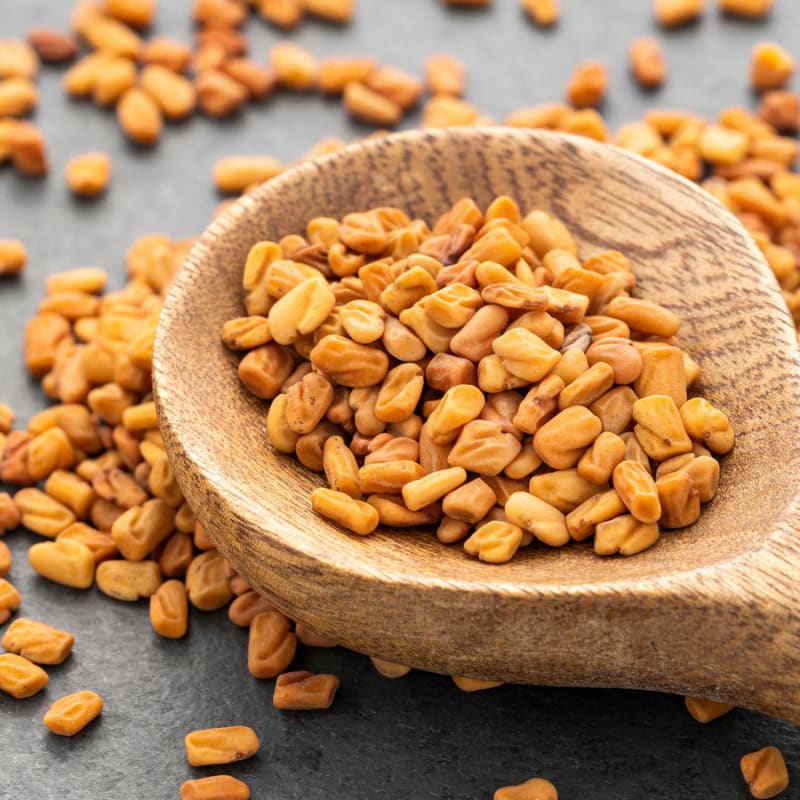
The dried seeds of Trigonella foenum-graecum. Small, hard, rectangular-ish, yellow-brown. The bitterness is intense and distinctive — one of the most bitter ingredients in Indian cooking. This bitterness is the point: used correctly and in small quantities, it adds complexity and depth. Used incorrectly or in excess, it makes a dish unpleasantly bitter.
Flavour & Aroma
Raw seeds: Intensely bitter, slightly maple-like (same sotolone compound as kasoori methi and maple syrup), faintly pungent. The raw smell is strong.
Toasted/bloomed in oil: The bitterness mellows significantly. A warm, nutty, complex bitterness replaces the harsh raw character. The maple note becomes more pronounced.
Slightly too toasted: Becomes very bitter. Fenugreek seeds are more sensitive to burning than most spices. Watch carefully — dark brown means bitter, golden-yellow is correct.
The character: fenugreek seeds provide a background bitterness that adds complexity rather than a specific identifiable flavor. You'd notice their absence as a vague simplicity, but you rarely identify "fenugreek" as a distinct note in the finished dish.
When to add it
- In hot oil at the start of tempering: Add with or just after mustard seeds. They bloom in oil quickly — 30 seconds to a minute on medium heat. Watch for golden-yellow color. Remove from heat or add next ingredient immediately before they darken.
- In very small quantities: 1/4 to 1/2 tsp for a dish serving 4 is typically enough. More than this tilts toward bitter.
- In pickles (achar): A prominent spice in Indian pickles. The bitterness acts as a preservative and flavor note alongside mustard seeds, turmeric, and chilli.
- Ground in some spice blends: Some South Indian spice mixes include small amounts of fenugreek seeds ground into the blend.
- Soaked and sprouted: Seeds soaked overnight and sprouted are eaten as a health food. Different application entirely from cooking.
What it contributes to a dish
Complex bitterness and depth. Fenugreek seeds add a background note that other spices don't provide — a slightly bitter, nutty, maple-warm complexity that rounds out a spice base. In South Indian cooking especially (sambar, certain dals, vegetable dishes), they are part of what creates the characteristic depth.
In pickles they provide both flavor and mild preservation — the compounds in fenugreek have antibacterial properties.
Works well with
- Mustard seeds — classic pairing in South Indian tempering and pickles.
- Cumin and coriander — the bitterness of fenugreek contrasts with cumin's earthiness.
- Turmeric — both earthy, the bitterness of fenugreek complements turmeric's mild earthiness.
- Tamarind — sour + bitter is a South Indian flavor combination. Used together in sambar and rasam.
- Vinegar and oil — in pickles, the acidity of the pickling medium mellows the bitterness well.
In blends
| Blend | Role |
|---|---|
| Sambar powder | Small amount for background bitterness |
| Panch phoron (Bengali five-spice) | One of the five seeds |
| Some pickle masalas | Prominent note alongside mustard |
| Some South Indian curry powders | Background complexity |
Forms & Storage
Whole seeds (standard) The form used for tempering and pickling. Hard, small, yellow-brown.
Ground fenugreek Used in some spice blends. Loses potency quickly — grind from whole seeds as needed.
Sprouted fenugreek Seeds soaked overnight and allowed to sprout. Eaten raw or lightly cooked as a health food. Different application from cooking use.
Storage: Whole seeds in an airtight jar: 2-3 years. Very shelf-stable compared to most spices — the hard seed protects the flavor compounds. Ground: 6 months.
Fenugreek seeds vs kasoori methi (dried leaves)
| Seeds (methi dana) | Dried leaves (kasoori methi) | |
|---|---|---|
| Form | Hard, small seeds | Dried leaf flakes |
| Use | Tempering, pickling, blends | Finishing herb in gravies |
| When added | Start of cooking — bloomed in oil | End of cooking — rubbed in |
| Bitterness | Intense when raw, mellows when toasted | Mild, pleasantly bitter |
| Interchangeable? | Never — completely different role |
Substitutes
No true substitute for the specific bitter complexity. In a pickle, you can omit fenugreek seeds and the pickle is still good — just less complex. In a South Indian dal tadka, omitting them is better than using too many.
Notes
- Bitterness control: the most common mistake is using too many fenugreek seeds. Start with less than you think you need. If a dish tastes bitter, fenugreek seeds (or burnt fenugreek) are usually the cause.
- Don't burn them: fenugreek seeds go from golden to bitter very quickly. Medium heat, watch closely, remove from heat or add liquid as soon as they're golden.
- Soaking reduces bitterness: some recipes call for soaking fenugreek seeds overnight before use. This leaches out some of the bitter compounds and makes them milder. Useful for dishes where you want more fenugreek flavor with less bitterness.
- The health angle: fenugreek seeds are one of the most studied spices for blood sugar regulation. Widely used in Ayurvedic medicine. The culinary and medicinal overlap is significant here.
Added Aug 31, 2026 · Updated Aug 31, 2026