Kashmiri Red Chilli (Kashmiri Laal Mirch)
The spice that gives Indian food its vibrant red color without burning heat. Kashmiri chilli is almost entirely about color and mild fruitiness — it is not a substitute for regular chilli when you want heat, and regular chilli is not a substitute for it when you want color.
What it is
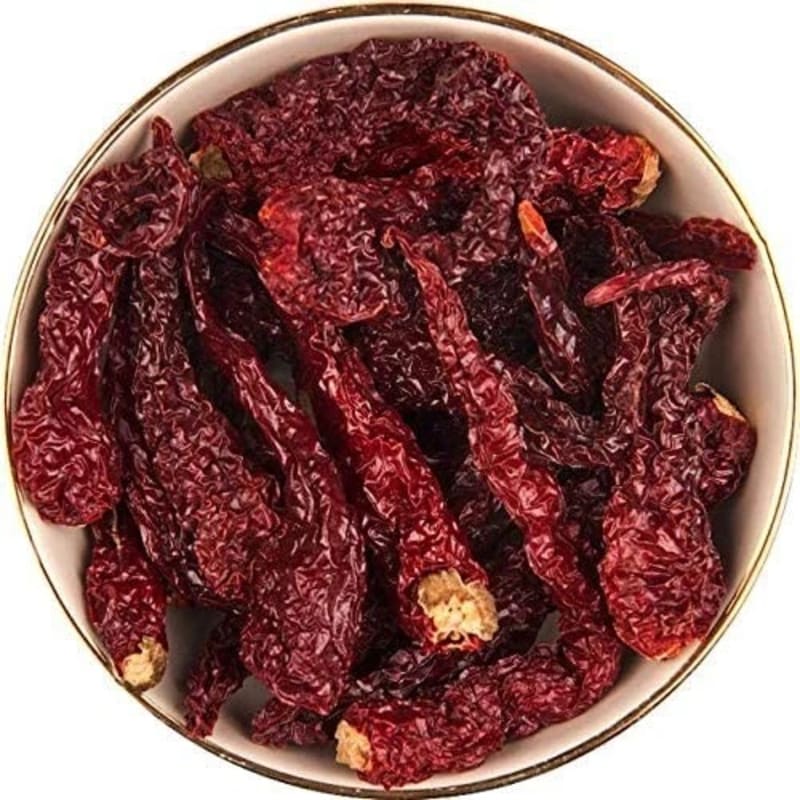
A variety of dried red chilli grown in Kashmir (Capsicum annuum). Distinguished by its deep crimson color, wrinkled skin, and low capsaicin content. Available whole or as powder. The powder is what most recipes mean when they say "Kashmiri red chilli powder."
Flavour & Aroma
Colour: Deep, vibrant red — the most striking characteristic. A small amount colors a whole dish.
Heat: Very mild — roughly 1,000–2,000 Scoville units, far lower than regular dried red chillies (50,000+) or cayenne (30,000–50,000). Adding more for color won't make the dish significantly spicier.
Flavour: Mild fruity, slightly sweet, earthy. More aroma than heat. It adds warmth without the sharpness of regular chilli.
When to add it
- In oil with other dry spices: The standard approach. Blooming it briefly in oil before adding liquid intensifies the color dramatically — the oil turns deep red.
- In masala pastes: Add early so it cooks into the base.
- In spice blends: Added as powder after grinding (not roasted separately) in most blends.
- As a marinade color: Mixed with yogurt or oil for tikka/tandoori marinades — provides the characteristic red without excessive heat.
What it contributes to a dish
Primarily color — that iconic deep red of butter chicken, tandoori chicken, dal makhani, and pav bhaji. Secondarily, mild fruity warmth that rounds out the flavor profile without adding sharpness.
The color matters more than most people realize — it signals richness and depth visually before you taste. Dishes made with regular chilli can taste identical but look entirely different.
Works well with
- Tomatoes — both red, the colors deepen each other.
- Yogurt/cream — the fat carries the color throughout a dish.
- Cumin and coriander — the standard Indian spice base; Kashmiri chilli adds the color layer.
- Garam masala — blends without competing.
In blends
| Blend | Role |
|---|---|
| Pav bhaji masala | Provides color and mild heat |
| Tandoori masala | Dominant color spice |
| Butter chicken masala | The primary red color source |
| Most restaurant-style curry powders | Added for visual appeal |
Forms & Storage
Whole dried Kashmiri chillies Used in spice blends (toasted briefly before grinding) and occasionally in tempering for color. Puff up when toasted — a sign they're releasing their oils. Shelf life: 6-12 months in an airtight jar.
Kashmiri red chilli powder The most common form. Used directly in oil, marinades, and spice blends. Never needs toasting — just add to hot oil or mix into paste.
Does roasting matter? For the powder, no — it's already been dried and processed. For whole chillies going into a ground blend, a brief toast (30-60 seconds) deepens the color slightly and makes them easier to grind.
Storage — critical: Kashmiri chilli loses color faster than almost any other spice. Store in a dark airtight container, away from light. If the powder has faded to a dull orange, so will your dishes. Replace every 3-4 months for best color results.
Substitutes
- For color without heat: paprika (sweet or smoked) is the closest substitute. Use 1:1. Smoked paprika adds a different flavor note — use sweet paprika if you want neutral.
- For heat without color: regular dried red chillies, cayenne, or red chilli powder — but you lose the vibrant color.
- No single substitute gives both — if a recipe needs Kashmiri chilli, use paprika for color + a small amount of cayenne for heat.
Notes
- Kashmiri chilli powder vs regular red chilli powder: these are completely different. Kashmiri is deep red, mild, and fruity. Regular red chilli powder is orange-red, sharp, and hot. Never substitute one for the other by the same quantity.
- Deggi mirch: a related product — a blend of Kashmiri chilli and bell pepper for even more color. Common in restaurant cooking.
- Storage: loses color faster than most spices. Store in a dark airtight container. If the powder looks faded, so will your dishes.
Added Aug 31, 2026 · Updated Aug 31, 2026