Fennel Seeds (Saunf)
Fennel seeds are the sweetest spice in Indian cooking — mild, anise-like, slightly cooling, with no heat. They balance the sharpness of other spices and add a characteristic sweetness that defines certain blends. They're also the seed offered at the end of an Indian meal as a digestive and breath freshener — the same seed, two completely different contexts.
What it is
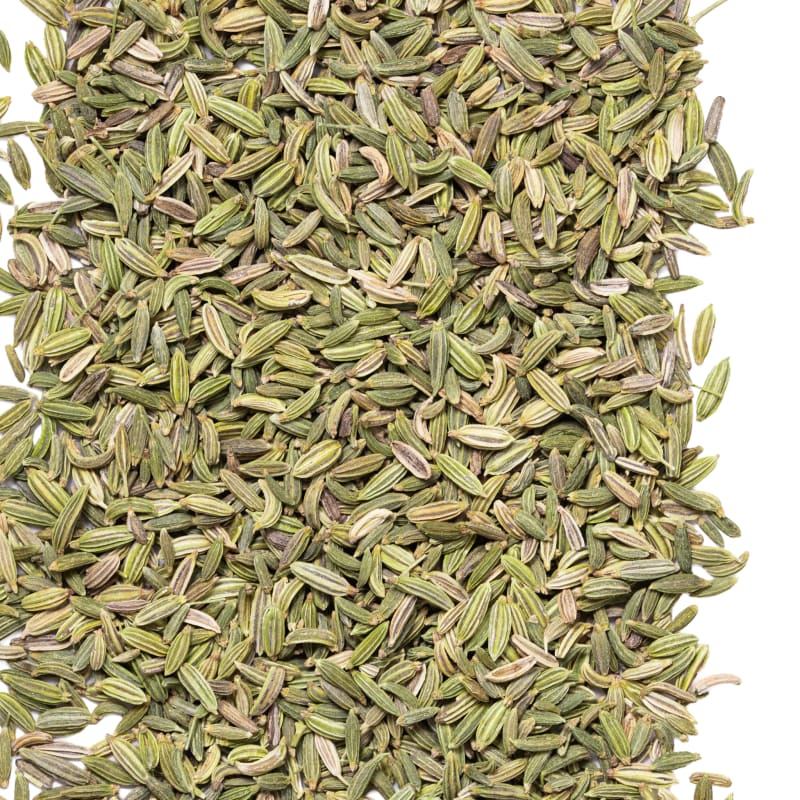
The dried seeds of Foeniculum vulgare, the fennel plant. Pale green, oval, ridged. Smell unmistakably of anise and liquorice. Related to anise and star anise but a distinct plant with a milder, sweeter character than either.
Flavour & Aroma
Raw/whole: Sweet, anise-like, slightly cooling (like mild liquorice). The most approachable of the Indian whole spices — not pungent, not bitter, not intense.
Toasted: Nuttier, slightly deeper. The sweet anise note remains but gains a warm, round quality. Most prominently used toasted in chutneys and some masalas.
Ground: Concentrated sweet-anise. Used in blends and marinades.
The character: fennel adds sweetness and a slight cooling quality in the same way green cardamom adds floral sweetness — they work together in many blends for this reason.
When to add it
- Whole in tempering: Less common than mustard or cumin for tempering, but used in some regional dishes and Bengali cooking. Blooms gently in oil — doesn't need aggressive heat.
- Whole in slow-cooked dishes: Nihari, pav bhaji, some biryanis. Adds sweetness that mellows with long cooking.
- Toasted and ground for chutneys and marinades: Dry toast until lightly golden, grind with other spices. Common in some meat marinades and dry rubs.
- In spice blends: Always present in pav bhaji masala and many garam masala variations.
- As a mouth freshener: Chewed whole after meals — this is the saunf served at Indian restaurant exits.
What it contributes to a dish
Sweetness and balance. Fennel is what keeps a spice blend from tasting harsh. In pav bhaji masala, it rounds out the earthiness of cumin and coriander and the tanginess of amchur. In garam masala, it provides sweetness that balances cloves and pepper. Without it, blends taste sharper and more aggressive.
The cooling quality also provides contrast against heat — dishes with both fennel and chilli have a more complex "hot-cool" character.
Works well with
- Cumin and coriander — the standard base trio of many North Indian blends. Fennel adds the sweet note.
- Amchur — tangy + sweet is a defining combination of street food flavors.
- Cinnamon and cardamom — all three are sweet aromatics; together they create layered sweetness.
- Lamb — fennel has a particular affinity for lamb. Traditional in some Kashmiri preparations.
- Yogurt-based marinades — fennel in a marinade adds sweetness and tenderises slightly.
In blends
| Blend | Role |
|---|---|
| Pav bhaji masala | Important sweetening note |
| Garam masala | Present in many versions for balance |
| Panch phoron (Bengali five-spice) | One of the five — bloomed in oil |
| Some chai masalas | Sweetness and digestive quality |
| Kashmiri cuisine | Prominent in meat preparations |
Forms & Storage
Whole seeds Standard form for tempering and slow cooking. Also chewed whole as a mouth freshener.
Ground fennel Used in blends and marinades. Loses its sweet top note within a few months. Grind from whole seeds for best results.
Toasted fennel Dry toast whole seeds until lightly golden and fragrant — about 2-3 minutes on low heat. Cool completely before grinding. Adds a nuttier dimension used in some chutneys and South Indian spice mixes.
Storage: Whole seeds in an airtight jar: 1 year. Ground: 3-4 months before sweet note fades noticeably.
Fennel vs anise vs star anise
All three share an anise-like character from the same aromatic compound (anethole) but are distinct:
| Spice | Character | Indian use |
|---|---|---|
| Fennel seeds | Mild, sweet, slightly cooling | Common — blends, tempering, mouth freshener |
| Anise seeds | Similar to fennel, slightly sharper | Less common in Indian cooking |
| Star anise | More intense, slightly different aromatic profile | Used in some blends and slow-cooked meat dishes |
They can substitute for each other in a pinch but are not identical.
Substitutes
- Anise seeds: closest substitute, use same quantity.
- Star anise: stronger — use half the quantity, crush slightly. The flavor profile differs slightly.
Notes
- Saunf after meals: the fennel seeds (and sometimes sugar-coated fennel) served at Indian restaurants and homes after meals are a digestive aid and breath freshener. The same seeds you cook with.
- Roasted vs raw saunf: roasted fennel seeds (sometimes with sugar coating) are a separate snack/mouth freshener category. These are not what you use in cooking.
- Amount in blends: fennel is often used in larger proportions than you'd expect — up to 1 tbsp in a garam masala batch. Its mildness means it can be used more liberally than more aggressive spices.
Added Aug 31, 2026 · Updated Aug 31, 2026