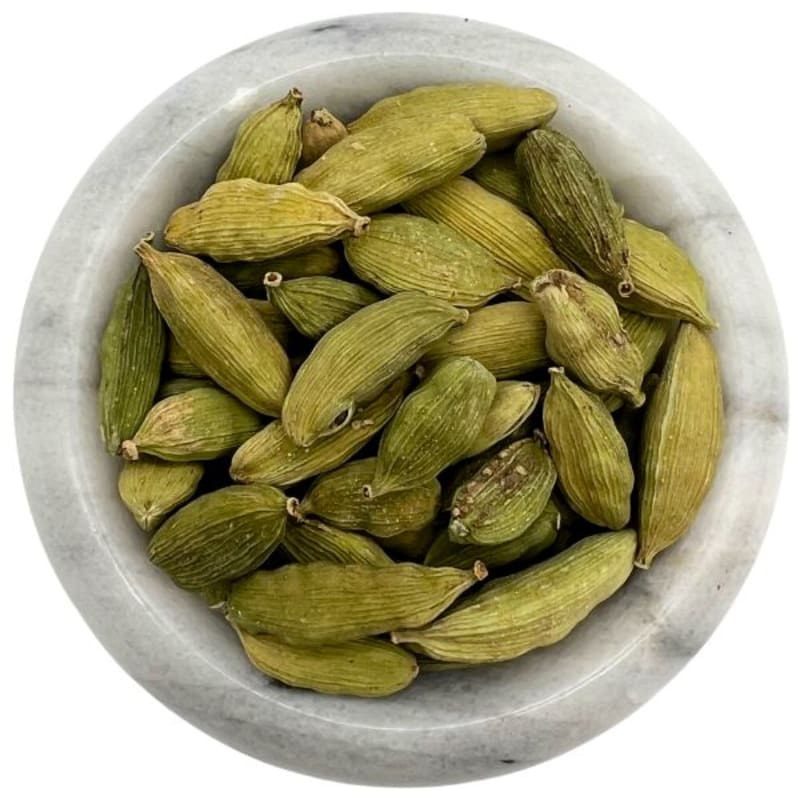
Green Cardamom (Hari Elaichi)
The most complex-smelling spice in Indian cooking. Green cardamom is floral, citrusy, and warming all at once — used in both savory dishes and desserts, in spice blends and as a breath freshener. Understanding when to use pods vs seeds vs ground changes the character of a dish significantly.
What it is
The seed pod of Elettaria cardamomum. Each pod contains 8-18 small black seeds — these are where the flavor lives. The green outer pod provides a milder, slightly eucalyptus-like background. Not to be confused with black cardamom (badi elaichi), which is a completely different spice with a smoky, camphor character.
Flavour & Aroma
Whole pod: Mild, eucalyptus-like warmth. The seeds inside are protected. Used this way in rice dishes and biryanis — you bite into a pod occasionally, get a burst of flavor, otherwise it's background.
Seeds only (removed from pod): Intensely floral, citrusy, sweet, warming. Concentrated compared to the whole pod. Used this way in chai and some desserts.
Ground (from pods or seeds): The most volatile form — loses potency fastest. Full floral intensity when freshly ground. Pre-ground cardamom is rarely worth using.
The character: floral (like roses crossed with citrus) with a warm, almost mentholated undertone. It elevates both sweet and savory contexts without making either taste "spiced" — it makes them taste more complex.
When to add it
- Whole pods in hot oil (tempering): Lightly bruise the pod first — press with the flat of a knife. Add early in the tempering before aromatics. The pod infuses the oil with its top notes.
- Whole pods in simmering liquid: Rice, biryanis, dal. Slow infusion. Remove before serving or warn people — biting into a whole pod is unpleasant.
- Seeds ground fresh for chai and desserts: Remove seeds from pods, grind with a mortar. Use immediately. This is when cardamom is at its most aromatic.
- Ground in spice blends: Added with other dry spices. Freshly ground from pods gives far better results than pre-ground powder.
What it contributes to a dish
Floral lift and complexity. Cardamom doesn't add heat or earthiness — it adds a perfumed, citrusy quality that lifts everything around it. In biryani, it makes the rice fragrant. In chai, it's what makes it smell like chai rather than just spiced tea. In kheer or halwa, it's what makes it smell like a dessert rather than cooked sugar.
Its contribution is often more to smell than taste — you notice cardamom before you taste it.
Works well with
- Cinnamon and cloves — the trio that defines the upper register of garam masala. Together they create warmth with complexity.
- Black pepper — pepper's sharpness contrasts with cardamom's sweetness; both warm.
- Rose water and saffron — classic Mughlai pairing for biryanis and desserts.
- Milk and cream — fat carries cardamom's volatile oils beautifully. Essential in chai, kheer, lassi.
- Cumin — earthy base + floral top creates a layered aromatic foundation for many Indian dishes.
In blends
| Blend | Role |
|---|---|
| Garam masala | Essential — provides the floral, warming top note |
| Pav bhaji masala | Present in most versions |
| Chai masala | One of the defining spices |
| Biryani masala | Key aromatic |
| Some chaat masalas | Regional, adds complexity |
Forms & Storage
Whole green pods The best form — keeps longest. Bruise or crack before use to release more flavor. Shelf life: 1 year if stored well.
Seeds only (removed from pods) More convenient for grinding or chai. Extract just before use — seeds exposed to air lose volatile oils quickly. Store pods and extract as needed rather than storing seeds separately.
Ground cardamom powder Loses potency very fast — weeks, not months. Pre-ground cardamom from a jar that's been open for months is largely flavorless. If you must use ground, buy in very small quantities and use quickly. Grinding your own from fresh pods takes 30 seconds and the difference is dramatic.
How to grind: split pods, remove seeds, grind seeds in a mortar or spice grinder. The empty pods can go into a jar of sugar to make cardamom sugar.
Storage: Pods in an airtight jar, cool and dark. The green color fading to pale indicates age — pale cardamom has diminished flavor. Replace when color fades significantly.
Green vs Black cardamom
| Green cardamom | Black cardamom | |
|---|---|---|
| Character | Floral, citrusy, sweet | Smoky, camphor, earthy |
| Use | Both sweet and savory | Savoury only — meat dishes, biryanis |
| Interchangeable? | No — completely different flavor |
Substitutes
No true substitute for the floral character. In a pinch: a small amount of ground coriander (for a vague citrus note) + a drop of rose water. Not equivalent.
Notes
- Cardamom is expensive — it's the third most expensive spice by weight after saffron and vanilla. Buy whole pods rather than ground; you get more value and better flavor.
- The pods in your food: in biryani and pilaf it's conventional to leave whole pods in the finished dish. Diners know to push them aside. Some cooks remove them before serving — both are acceptable.
- Cardamom as a breath freshener: chewing a pod after a meal is a traditional Indian practice. The seeds freshen breath and aid digestion. The pods at the end of an Indian restaurant meal aren't decorative.
Added Aug 31, 2026 · Updated Aug 31, 2026