Dried Ginger Powder (Soonth / Adrak Powder)
Dried ginger powder is not a substitute for fresh ginger — it's a different ingredient with a different flavor profile and different applications. Fresh ginger is bright, juicy, and sharp. Dried ginger is hotter, more concentrated, slightly woody, and works differently in spice blends and slow-cooked dishes. Understanding the distinction changes how you use both.
What it is
Ginger rhizomes (Zingiber officinale) dried and ground to a powder. The drying process converts some of the gingerols (fresh ginger's primary compounds) into shogaols, which are more stable, drier in character, and roughly twice as pungent per weight. This is why dried ginger tastes "drier" and more intensely spiced than fresh.
Flavour & Aroma
Dried ginger powder (soonth): Warm, dry heat, slightly woody, more pungent than fresh ginger per quantity. The bright citrusy sharpness of fresh ginger is largely absent. The heat is deeper and lingers differently.
Fresh ginger: Bright, citrusy, juicy, sharp. Heat is immediate and clean.
The key distinction:
- Fresh ginger = bright, juicy, sharp, citrus-forward
- Dried ginger powder = concentrated, dry, woody, more persistently hot
They are not interchangeable — 1 tsp dried ≠ 1 tsp fresh. If substituting, use 1/4 tsp dried powder per 1 tsp fresh grated ginger, and expect a different character.
When to add it
- In dry spice blends: The primary use in Indian cooking. Added to garam masala, pav bhaji masala, chai masala, and nihari masala. Provides a dry, concentrated ginger heat that integrates into blends better than fresh ginger could.
- In slow-cooked dishes: Nihari especially — the traditional recipe uses dried ginger powder alongside other whole spices for the characteristic dry warmth.
- In chai masala: A small amount gives a warming, persistent ginger note. Fresh ginger is also used in chai but gives a different (brighter) result.
- Never as a substitute for fresh ginger in aromatics: Fresh ginger sautéed with onions and garlic cannot be replaced by dried powder — different function entirely.
What it contributes to a dish
Dry, concentrated warmth and spice-blend integration. In spice blends, dried ginger provides a warm heat that dissolves seamlessly into other spices — it doesn't stand out the way fresh ginger does. It adds body and a warm spiciness that rounds out blends and adds depth to slow-cooked dishes.
In chai masala it provides the warming background note; in nihari it's part of the complex dry spice profile that defines the dish.
Works well with
- Cinnamon and cardamom — both sweet-warm aromatics that complement dried ginger's dry heat.
- Black pepper — both provide heat, different character — peppery + gingery warmth is a classic combination.
- Amchur — the dry-sharp combination of dried ginger and amchur is used in chaat preparations.
- Cloves and nutmeg — in spice blends, dried ginger bridges the sweet (nutmeg) and the intense (cloves).
In blends
| Blend | Role |
|---|---|
| Pav bhaji masala | Dry heat component |
| Nihari masala | Prominent warming note |
| Some garam masalas | Background heat |
| Chai masala | Warming spice alongside cardamom |
| Some chaat preparations | Dry heat contrast to amchur's sourness |
Forms & Storage
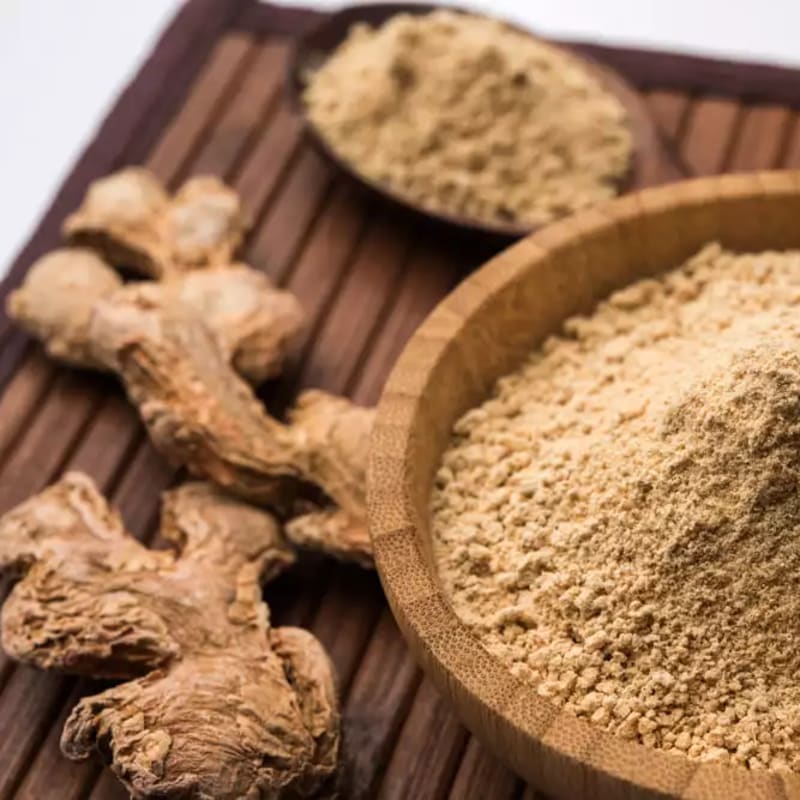
Ground dried ginger powder (soonth) The only practical form. Pale yellow-beige. Should smell intensely of concentrated ginger — dry and warm, not bright and citrusy.
Dried ginger slices/pieces Sometimes available — can be ground at home. Used occasionally in chai (a piece simmered in milk) for a more textured ginger infusion.
Should you make your own? Slice fresh ginger thin, dry in a low oven (200°F / 90°C) for 2-3 hours until completely dry, then grind. The result is more aromatic than commercial powder. Worth doing if you cook with it frequently.
Storage: Airtight jar, 6-12 months. Loses pungency faster than most spices. When the powder smells faintly of generic spice rather than distinctly of ginger, replace it.
Fresh vs dried — when to use which
| Situation | Use |
|---|---|
| Sautéing with onion and garlic | Fresh ginger |
| In dry spice blends | Dried ginger powder |
| Quick-cooked dishes where ginger is prominent | Fresh |
| Slow-cooked dishes, nihari, biryani masala | Dried |
| Chai — bright sharpness | Fresh |
| Chai — warm background note | Dried |
| Marinades | Both work; fresh is brighter |
Substitutes
- Fresh ginger for dried: use 4x the quantity; expect a brighter, less concentrated result. Doesn't work well in dry blends.
- Dried for fresh: use 1/4 the quantity; expect a drier, less vibrant result. Doesn't work well in sautéed aromatics.
- Ground galangal: related plant, similar direction but different flavor. Not a true substitute.
Notes
- Soonth in Ayurveda: dried ginger is considered a different substance from fresh ginger in traditional Indian medicine (saunth vs adrak). It's prescribed for digestion, circulation, and warming the body. Culinary use and medicinal use overlap significantly here.
- Pungency difference: shogaols (dominant in dried ginger) are about twice as pungent as gingerols (dominant in fresh). Use less dried than you'd think.
- The chai question: both fresh and dried ginger are used in chai. Fresh gives a brighter, more aggressive ginger note. Dried gives a warmer, more integrated note. Many traditional masala chai recipes use dried ginger powder in the blend rather than fresh.
Added Aug 31, 2026 · Updated Aug 31, 2026