Cumin (Jeera)
One of the most used spices in Indian cooking. Cumin has two distinct personalities depending on how it's treated — raw it's sharp and slightly grassy; toasted it becomes nutty, earthy, and warm. Understanding this split is the key to using it well.
What it is
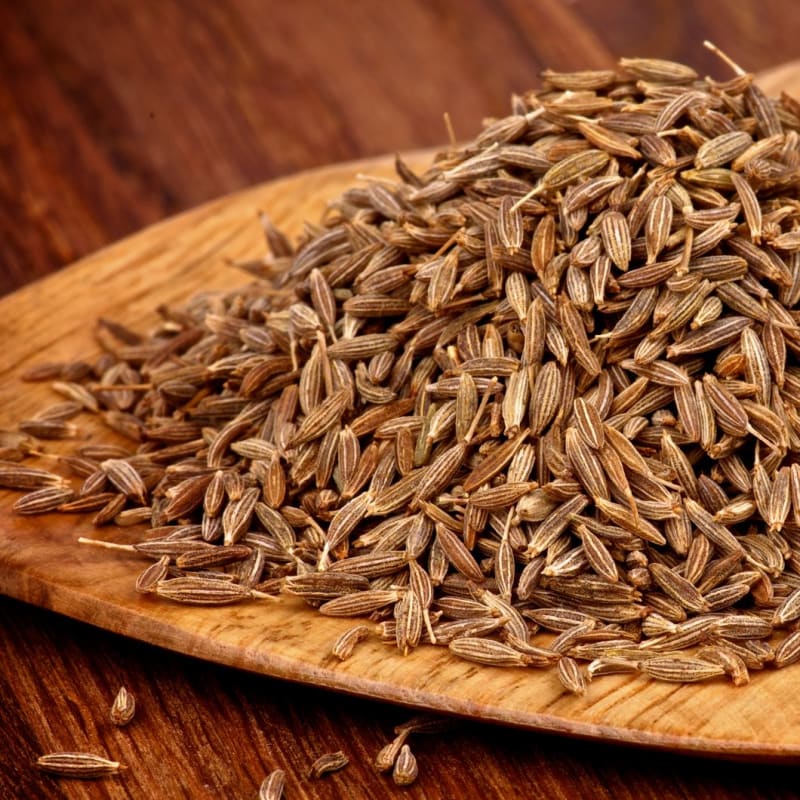
Cumin is the dried seed of Cuminum cyminum, a plant in the parsley family. It comes whole (jeera) or ground. Whole seeds are used for tempering; ground cumin is used in masalas and dry rubs. They are not interchangeable in technique, though they contribute the same underlying flavor.
Flavour & Aroma
Raw/untoasted: Sharp, slightly grassy, faintly bitter. The smell can be pungent and medicinal.
Toasted/bloomed in oil: Nutty, earthy, warm, deeply savory. The bitterness disappears and it becomes round and complex. This transformation is dramatic — toasted cumin smells nothing like raw cumin.
Ground (roasted cumin powder): The most concentrated form. Adds depth without the crunch or oil-bloom step. Used as a finishing spice — sprinkled on raita, chaat, lassi, dal.
When to add it
- Whole seeds in hot oil (tempering): Add to oil before any other ingredients. They should sizzle and turn slightly darker — 20-30 seconds. This releases the fat-soluble aromatics. Don't let them burn (bitter) or stay pale (not enough flavor extracted).
- Ground cumin with other dry spices: Add after aromatics (onion, ginger, garlic) are cooked. Fry briefly in oil before adding liquid.
- Roasted cumin powder as a finish: Add at the very end or at the table. Heat destroys the roasted character you built.
What it contributes to a dish
Cumin provides the earthy, savory backbone of most Indian dishes. It's not heat, not brightness, not sweetness — it's depth. Without it, Indian food tastes flat and one-dimensional even if all the other spices are present. It's what makes a dish smell "Indian" from across the room.
Works well with
- Coriander — the classic pair. Coriander brightens; cumin deepens. Most Indian masalas use both at roughly 2:1 (coriander:cumin).
- Turmeric — both are earthy; they reinforce each other.
- Black pepper — adds sharpness that cumin lacks.
- Fennel — sweetness that balances cumin's earthiness. Common in pav bhaji masala and some chai blends.
- Chilli — cumin's earthiness softens chilli heat, making it feel rounder.
In blends
| Blend | Role |
|---|---|
| Garam masala | One of the base notes — earthy foundation |
| Pav bhaji masala | Prominent, provides the savory base |
| Chaat masala | Roasted cumin powder is a key component |
| Cumin rice / jeera rice | The star, not background |
| Dal tadka | Tempered whole seeds define the dish |
Forms & Storage
Whole seeds (jeera) The freshest and most versatile form. Bloom in oil for tempering, or dry-roast and grind yourself. Shelf life: 1 year in an airtight jar away from heat and light.
Ground raw cumin (jeera powder) Convenient for masalas and curry bases. Loses potency faster than whole seeds — buy in small quantities and replace every 3-4 months. A dull, flat smell means it's past its best.
Roasted cumin powder (bhuna jeera) Used exclusively as a finisher — never cooked. Sprinkle on raita, chaat, lassi, dal, chaas, or cut fruit just before serving. The roasted character is the point; heat destroys it entirely.
Should you make your own? Yes — the difference between homemade and store-bought roasted cumin powder is dramatic. Store-bought is roasted months before you open it. Homemade takes 5 minutes and smells incomparably better.
How to make roasted cumin powder: dry toast whole seeds in a pan on low-medium heat, stirring continuously, until they darken 1-2 shades and smell deeply nutty — about 4-5 minutes. Cool completely on a plate. Grind to a fine powder. Store in an airtight jar. Use within 6-8 weeks before the roasted aroma fades.
Substitutes
No true substitute — cumin is irreplaceable in Indian cooking. In a real emergency, caraway seeds are botanically related and have a vaguely similar profile but are sharper and less earthy. Not recommended.
Notes
- Whole vs ground: whole seeds have longer shelf life and better aroma when toasted fresh. Pre-ground cumin loses potency quickly — buy small quantities.
- Roasting your own: dry toast whole seeds in a pan until they darken 1-2 shades and smell nutty. Cool completely before grinding. Store in an airtight jar, use within 1-2 months.
- Black cumin (kala jeera / shahi jeera): a different, smaller, more expensive variety. Sweeter, more floral, used in biryanis and some Mughlai dishes. Not interchangeable with regular cumin.
Added Aug 31, 2026 · Updated Aug 31, 2026