Coriander (Dhaniya)
The most used spice in Indian cooking by volume. Coriander seeds and fresh coriander (cilantro) come from the same plant but taste completely different — don't confuse them. The seeds are warm, citrusy, and slightly floral; the leaves are bright and herbaceous. This page covers the seeds.
What it is
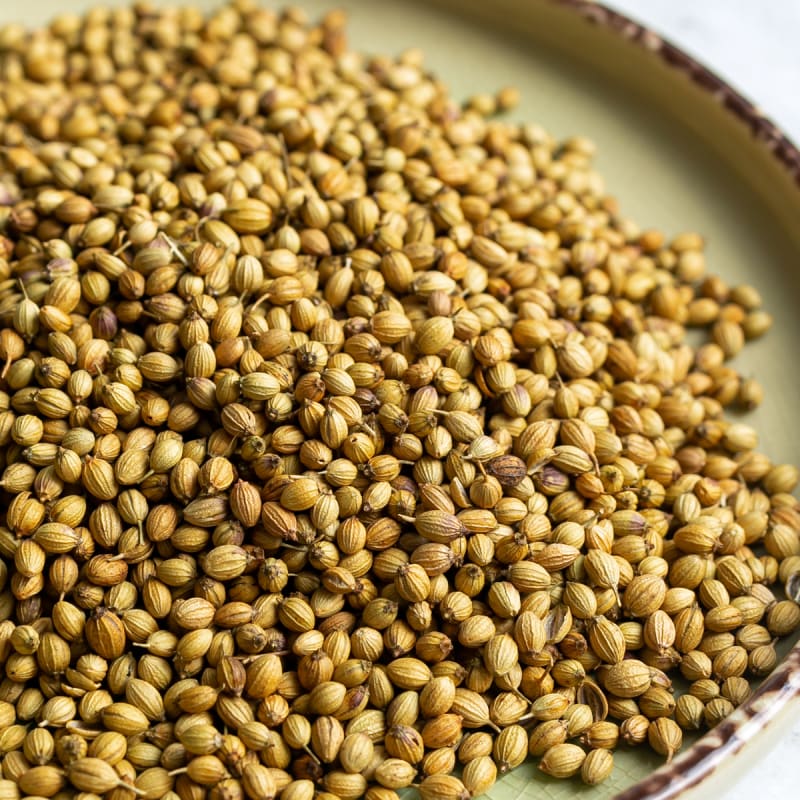
The dried seeds of Coriandrum sativum. Used whole for tempering or ground into powder. In Indian cooking it almost always appears alongside cumin — they are the foundation of most masalas. Coriander is the lighter, brighter half of that pair.
Flavour & Aroma
Raw: Mild, slightly citrusy, faintly floral, gentle warmth. Far less assertive than cumin raw.
Toasted: Nuttier, more aromatic, the citrus note deepens. The transformation is real but less dramatic than cumin — coriander is more forgiving about how it's treated.
Ground: Warm, earthy with citrus undertones. The most versatile form — it blends into dishes without announcing itself, which is the point.
When to add it
- Whole seeds in tempering: Less common than cumin for tempering, but used in some South Indian dishes. Behaves similarly — bloom in oil until fragrant.
- Ground with dry spices: The standard use. Add after aromatics, fry briefly before adding liquid. Coriander powder doesn't need long cooking — 30-60 seconds in oil is enough.
- As a finishing spice: Rarely — coriander is a background note, not a finisher. Roasted coriander powder works as a garnish on some dishes.
What it contributes to a dish
Coriander provides brightness and body — it rounds out the flavor of a masala and stops it from being too heavy. Where cumin deepens, coriander lifts. Together they create balance. Coriander also acts as a mild thickener in gravies when used in larger quantities.
Without coriander, Indian dishes taste flatter and earthier than intended. You notice its absence more in the texture and balance than in any single identifiable note.
Works well with
- Cumin — the essential pairing. Ratio is typically 2:1 coriander to cumin. Coriander brightens what cumin deepens.
- Turmeric — both earthy, reinforce each other.
- Chilli — coriander softens and rounds chilli heat.
- Ginger — coriander's citrus note complements ginger's sharpness.
- Fennel — both have sweetness; they amplify each other in blends like pav bhaji masala.
In blends
| Blend | Role |
|---|---|
| Garam masala | Base note — body and warmth |
| Pav bhaji masala | Highest quantity spice — forms the foundation |
| Chaat masala | Background warmth |
| Sambar powder | Dominant note alongside chilli |
| Most curry powders | Always present, often the largest quantity |
Forms & Storage
Whole seeds (sabut dhaniya) Best form for maximum aroma. Toast and grind fresh for spice blends — the difference vs pre-ground is noticeable. Shelf life: 1 year in an airtight jar.
Ground coriander powder — fine (dhaniya powder) The standard form for everyday cooking. Integrates completely into gravies and sauces with no grittiness. Versatile. Buy in small quantities — loses potency within 3-4 months of opening.
Ground coriander powder — coarse (dhaniya crushed) Partially ground, closer to cracked seeds than fine powder. Retains more of the floral, citrus top notes because less surface area is exposed to air — noticeably more aromatic than fine powder. Two uses where coarse is preferred over fine:
- Dry rubs and kebab marinades — the texture clings better to meat and creates a slightly crunchy crust.
- Some chutneys and pickles — where texture is part of the experience.
Coarse also has a longer shelf life than fine powder — the less it's ground, the slower the volatile oils escape. A useful middle ground if you don't want to grind whole seeds every time but find pre-ground fine powder going stale too quickly.
Roasted coriander powder Less common than roasted cumin, but used in some chaat blends and as a garnish on certain South Indian dishes. To make: dry toast whole seeds until golden and sweet-smelling, cool, grind. Shelf life: 4-6 weeks. Store in an airtight jar away from light.
Is roasted powder worth making? For chaat masala and specific garnish uses, yes — it adds a nuttier, sweeter note than raw ground. For everyday curry use, raw ground works fine.
Substitutes
No true substitute for the seeds. If unavailable, increase cumin slightly — the dish will be earthier and less bright but still work. Fresh coriander leaves are not a substitute; they add a completely different flavor and texture.
Notes
- Whole vs ground: whole seeds stay fresh much longer. Toast and grind fresh for masalas when you can — the difference in aroma is noticeable.
- Ratio to cumin: when a recipe says "coriander-cumin powder" without quantities, the default is 2 parts coriander to 1 part cumin.
- Don't over-roast: coriander burns faster than cumin. Watch for a golden color and a sweet, nutty smell — not dark brown.
Added Aug 31, 2026 · Updated Aug 31, 2026