Cloves (Laung)
The most intense spice in Indian cooking. Cloves are powerful and dominating — a small number can define the flavor of an entire dish. More is not better. Understanding their intensity and when to hold back is as important as knowing when to use them.
What it is
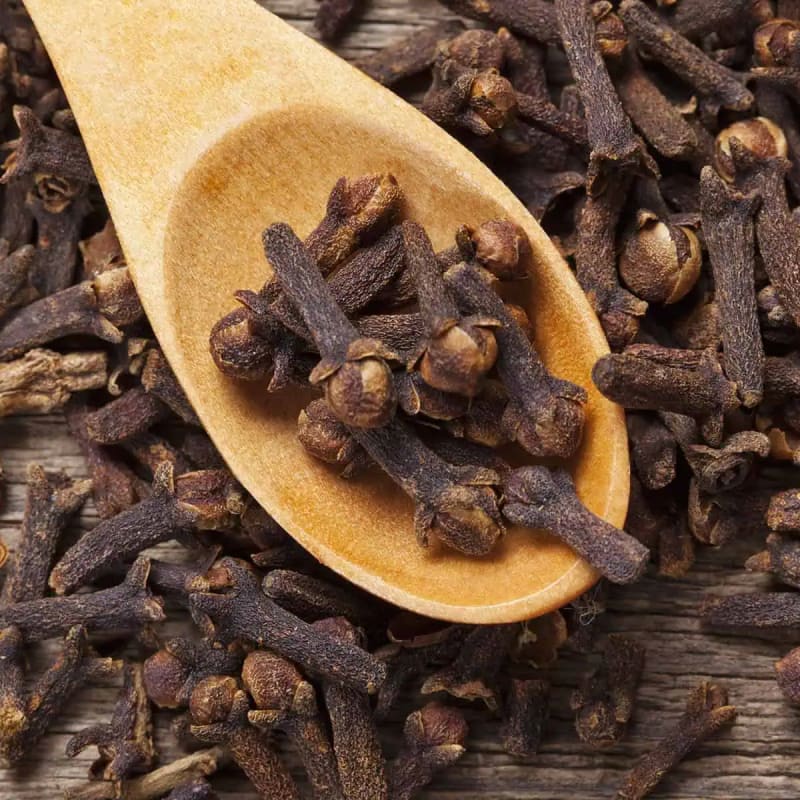
The dried flower bud of Syzygium aromaticum, an evergreen tree native to the Maluku Islands (Indonesia). The nail-like shape gives them their name — clou means nail in French, laung in Hindi. The essential oil (eugenol) is responsible for the numbing, intense aromatic character.
Flavour & Aroma
Raw: Intensely aromatic, sweet-spicy, warming, with a numbing quality. Biting into a whole clove releases eugenol directly — strong enough to temporarily numb the tongue.
Bloomed in oil: The numbing quality diminishes, leaving a warm, sweet-spicy depth. The aroma that rises into the oil is one of the most potent of any whole spice.
Ground: Intensely flavored — use very sparingly. A 1/4 tsp of ground cloves can dominate a dish. Usually used in tiny amounts in blends.
The key point: cloves are powerful. 4-5 whole cloves is often enough for a dish serving 4-6. Recipes that list "10 cloves" are usually making large batches or have very high spice tolerance.
When to add it
- Whole in hot oil (tempering) for rice and meat dishes: One of the first spices in the oil, along with cinnamon and cardamom. Blooms quickly — 20-30 seconds. Used in biryani, pulao, and slow-cooked meat dishes.
- Whole in slow-simmered dishes: Haleem, nihari, some dals. The flavor infuses slowly and mellows with long cooking.
- Ground in spice blends: Used in very small amounts — cloves ground into garam masala provide intensity without dominating if the ratio is right.
- Remove before serving: Biting into a whole clove in the middle of a dish is unpleasant. Either remove before serving or warn people.
What it contributes to a dish
Warming, sweet-spicy depth and intensity. Cloves provide the "rich" quality of garam masala and biryani — the note that makes a dish smell festive and complex. In small amounts, they round out and deepen the flavor of other spices. In larger amounts, they dominate everything.
The numbing quality from eugenol also works as a flavor bridge — it temporarily mutes sharp or harsh notes in a dish, making the overall flavor smoother.
Works well with
- Cinnamon and cardamom — the trio. These three whole spices together define the aromatic profile of garam masala and biryani. They amplify each other.
- Black pepper — both intense aromatics; pepper's sharpness and cloves' sweetness balance.
- Star anise — similar aromatic character; used together in some Mughlai preparations.
- Meat — cloves have an affinity for lamb and beef in particular. The numbing quality seems to balance the richness of fatty meat.
In blends
| Blend | Role |
|---|---|
| Garam masala | Essential — warming intensity |
| Pav bhaji masala | Present for depth |
| Biryani masala | Key whole spice |
| Chai masala | Small amount for warmth |
| Nihari masala | Prominent note |
Forms & Storage
Whole cloves The standard form. Used for tempering and slow cooking. The head of the clove (the rounded part) contains most of the essential oil — this is where the flavor is concentrated. Fresh cloves feel slightly oily and have a strong aroma; dried-out cloves feel lightweight and smell faint — discard these.
Ground cloves Very strong — use a fraction of what you'd use of other ground spices. Typically 1/8 to 1/4 tsp is sufficient for most dishes. Pre-ground loses potency quickly.
Should you grind your own? Yes — the difference between freshly ground and pre-ground is significant. Grind only what you need immediately.
Storage: Whole cloves in an airtight jar: 1-2 years. Ground: 6 months. The oily feel and strong aroma are signs of freshness — when a clove feels dry and light, it's past its best.
Substitutes
- Allspice — contains eugenol and tastes somewhat like cloves + cinnamon + pepper. Usable substitute in blends.
- Cinnamon + black pepper — can approximate the warming note without the intensity of cloves.
Notes
- Dental note: clove oil (eugenol) is used in dentistry as an analgesic and antiseptic. Chewing a clove for a toothache provides temporary numbing relief — a traditional remedy.
- The stems vs heads: in whole cloves, the rounded head is the flower bud (more flavorful) and the stem is the stalk (milder). Both are used together as they come.
- Quantity discipline: if a dish tastes medicinal or overwhelmingly sweet-spicy, cloves are usually the culprit. Reduce by half and taste again.
Added Aug 31, 2026 · Updated Aug 31, 2026