Cinnamon (Dalchini)
Cinnamon in Indian cooking is used very differently from Western baking. It's a savory spice here — part of the warming base of garam masala, a tempering spice for rice and meat dishes, not a sweet spice for cakes and porridge. Understanding this context changes how you use it.
What it is
The dried inner bark of Cinnamomum trees. Two distinct varieties matter:
Ceylon cinnamon (true cinnamon, C. verum): Thin, papery, tan-colored, rolled in multiple soft layers. Mild, sweet, delicately spiced. Native to Sri Lanka. More expensive.
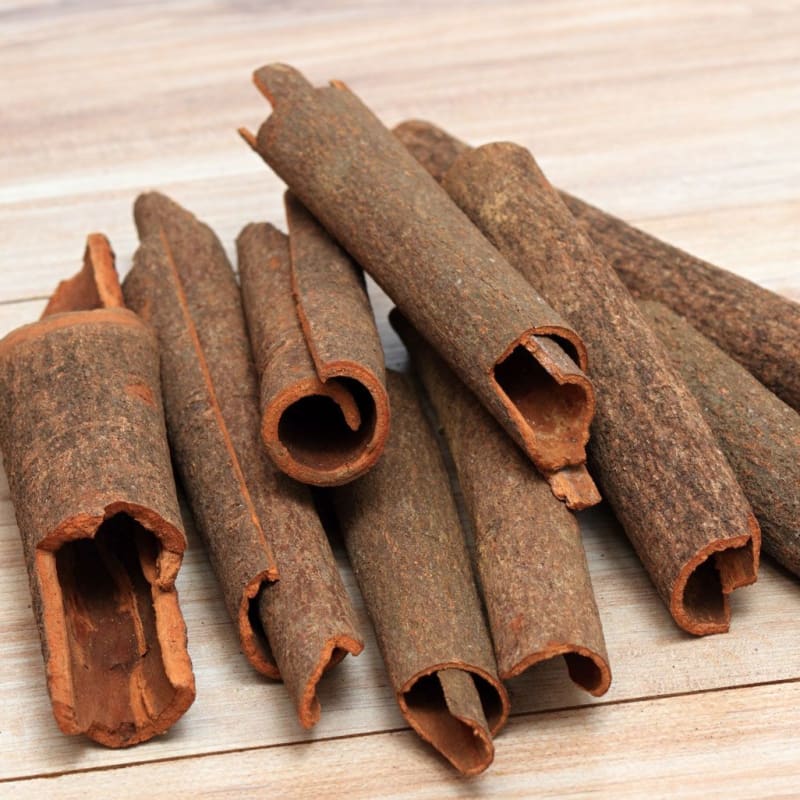
Cassia (Chinese cinnamon, C. cassia / C. aromaticum): Thicker, harder, darker reddish-brown, single layer roll. Stronger, more pungent, slightly bitter. Most of what is sold as "cinnamon" in supermarkets, especially in India. This is dalchini in Indian cooking.
In Indian recipes, cassia is the norm. They are not interchangeable in the same quantity — cassia is significantly stronger.
Flavour & Aroma
Whole stick (cassia): Warm, sweet-spicy, slightly woody, with a mild bitterness that rounds in long cooking. Releases flavor slowly into oil or liquid.
Ground (cassia): Stronger, more pungent, slightly astringent. Used in very small amounts in blends.
Ceylon cinnamon: Softer, sweeter, more complex. If you can find it, it's worth using in desserts and chai where the flavor is prominent.
When to add it
- Whole stick in hot oil (tempering): Add early with other whole spices — cardamom, cloves. Break the stick into smaller pieces to increase surface area. It should sizzle gently in the oil for 30 seconds before adding aromatics.
- Whole in slow-cooked dishes: Biryani, haleem, nihari, some dals. Mellows and deepens with long cooking. Remove before serving — biting into a piece of cinnamon stick is unpleasant.
- Ground in spice blends: Used in garam masala and other blends. Provides sweet warmth. Fresh-ground from a stick is far better than pre-ground.
- In chai: A piece of stick simmered in milk gives sweetness and warmth without bitterness.
What it contributes to a dish
Sweet warmth and body. Cinnamon's role in Indian savory cooking is to add a sweet-spiced warmth that rounds out the sharper notes of pepper, cloves, and cardamom. It provides cohesion — the spices in garam masala feel like a whole rather than a collection of separate flavors partly because of cinnamon.
In rice dishes it gives a fragrance that makes the kitchen smell like a celebration. In meat dishes it deepens the richness without adding heat.
Works well with
- Cardamom and cloves — the inseparable trio of Indian whole spice tempering. These three together define the aromatic base of biryani, garam masala, and Mughlai cooking.
- Cumin — earthy + sweet; cumin grounds what cinnamon lifts.
- Black pepper — pepper's sharpness balances cinnamon's sweetness.
- Lamb and beef — cinnamon has a particular affinity for fatty red meats.
- Tomato — the sweetness of cinnamon tames tomato acidity.
In blends
| Blend | Role |
|---|---|
| Garam masala | Essential base — sweet warming note |
| Pav bhaji masala | Present for depth |
| Biryani masala | Prominent whole spice |
| Chai masala | One of the defining spices |
| Nihari masala | Background warmth |
Forms & Storage
Whole sticks (cassia) Standard for Indian cooking. Break into smaller pieces for tempering to increase contact with oil. One 2-inch stick is typically enough for a dish serving 4.
Ceylon cinnamon sticks Recognisable by their thin, papery, loosely rolled layers. Pricier but worth it for chai and desserts where cinnamon is a featured flavor.
Ground cinnamon Loses potency within a few months. Freshly ground from a stick is dramatically more aromatic. For blends and applications where you need fine powder, grind your own.
Storage: Whole sticks: 2-3 years in an airtight jar. Ground: 6 months. When a stick smells faint and wooden rather than sweet and spiced, it's past its best.
Ceylon vs Cassia — does it matter?
| Ceylon | Cassia | |
|---|---|---|
| Flavour | Sweet, complex, delicate | Strong, pungent, slightly bitter |
| Hardness | Soft, easily ground by hand | Hard, needs a grinder |
| Indian cooking | Less common | Standard (dalchini) |
| Desserts and chai | Preferred | Acceptable |
| Coumarin content | Negligible | Higher — relevant for very large daily consumption |
For everyday Indian cooking, cassia (standard supermarket cinnamon) is correct. If you make chai daily and want the best flavor, Ceylon is worth seeking out.
Substitutes
- Cassia for Ceylon: works in savory dishes; use half the quantity. Not ideal for delicate desserts.
- Allspice: contains some of the same aromatic compounds. Can approximate in blends but doesn't replicate.
Notes
- The stick in the dish: in biryani and pulao it's traditional to leave the cinnamon stick in the finished dish. Diners push it aside. If you prefer, remove before serving.
- Cinnamon in sweet vs savory: in Western cooking, cinnamon is a dessert spice. In Indian cooking it's equally (or more) a savory spice. Don't let Western intuition limit how you use it.
Added Aug 31, 2026 · Updated Aug 31, 2026