Black Pepper (Kali Mirch)
The world's most traded spice, used in Indian cooking for a kind of heat that is completely different from chilli heat. Black pepper's pungency hits the back of the throat and fades quickly — it's sharp and fleeting. Chilli heat is broader and lingers. Understanding this difference changes how you use both.
What it is
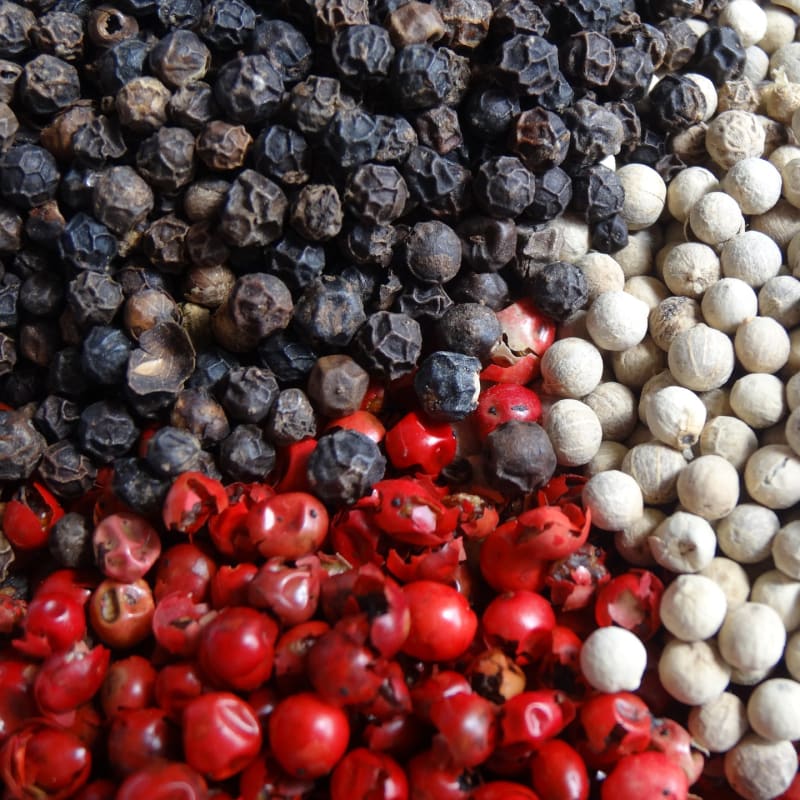
The dried, unripe berry of Piper nigrum. Black pepper is the whole dried berry; white pepper is the same berry with the outer skin removed (milder, less complex). Green peppercorns are the fresh unripe berry. In Indian cooking, black pepper is used overwhelmingly — whole in tempering and garam masala, ground as a finishing note.
Flavour & Aroma
Whole, uncooked: Woody, mildly pungent. The aroma is familiar but restrained.
Freshly ground: Sharp, floral, pungent, with a bright top note that fades within minutes of grinding. Pre-ground pepper that's been sitting for months has lost this almost entirely.
Bloomed in oil: Nutty, deeper, less sharp. Used this way in some South Indian dishes and biryanis.
The heat: Piperine is the compound responsible. It activates different receptors than capsaicin (chilli heat). Black pepper heat is dry, sharp, catches at the back of the throat, and fades quickly. It doesn't build the way chilli does.
When to add it
- Ground, as a finisher: The most common use globally. Grind over a dish just before serving for maximum aroma.
- Whole in tempering or slow-cooked dishes: Whole peppercorns added early release their flavor slowly. Used in biryanis, some garam masalas, and long-simmered meat dishes like nihari and haleem.
- Ground into dry spice mixes: Added mid-cook with other dry spices. The aroma is partially lost but it contributes depth.
- In marinades: Ground pepper in yogurt-based marinades for tikka and tandoori is essential — it penetrates the meat.
What it contributes to a dish
Dry, throat-catching heat and aromatic depth. In Indian cooking, black pepper does two things: it adds a heat that is fundamentally different from chilli, and it adds complexity to spice blends. In garam masala it provides the warming pungency. In Chettinad cuisine (South India) it's a dominant flavor — used in quantities that would seem excessive in other cuisines but create a distinctive "hot" dish that isn't chilli-hot.
Works well with
- Cumin — earthy and pungent together. Black pepper sharpens what cumin deepens.
- Coriander — the citrus note in coriander balances pepper's sharpness.
- Cardamom — both aromatic; together they define the upper register of garam masala.
- Cloves — intense pairing. Both can dominate; used carefully together they create warmth.
- Ginger — another throat-warming spice; they amplify each other.
In blends
| Blend | Role |
|---|---|
| Garam masala | Essential — provides the pungent warming note |
| Pav bhaji masala | Background heat and depth |
| Chaat masala | Sharp note alongside cumin and amchur |
| Rasam powder | Dominant in some versions |
| Chettinad masala | Featured prominently — defines this cuisine |
Forms & Storage
Whole black peppercorns The best form. Grind fresh as needed — the difference between freshly ground and pre-ground that's been sitting is significant. Used whole in tempering and slow-cooked dishes. Shelf life: 3-4 years whole.
Freshly ground black pepper Grind just before using for maximum aroma. The volatile aromatics start escaping immediately after grinding. A burr grinder or heavy mortar gives more even results than blade grinders.
Pre-ground black pepper Convenient but significantly less aromatic. The volatile compounds that give fresh-ground pepper its character have largely oxidised. Buy whole peppercorns and grind yourself whenever possible.
White pepper The same berry, skin removed. Milder, less complex, with a slightly musty note. Used in some Indian recipes for white or cream-colored dishes where black specks would be aesthetically unwanted.
Storage: Whole peppercorns keep for years. Ground pepper: 3-6 months before significant aroma loss. Keep away from heat, light, and moisture.
Substitutes
No true substitute for the specific type of heat. For heat in general: chilli works but gives a different character. For the aromatic note: long pepper (pipli) is a traditional Indian alternative that's more complex but harder to find.
Black vs White vs Green pepper — same plant, different processing
All three come from the same plant (Piper nigrum) at different stages of ripeness and processing:
| Colour | How made | Flavour | Indian use |
|---|---|---|---|
| Black | Unripe berry, dried whole | Pungent, sharp, aromatic, complex | Standard — tempering, blends, finishing |
| White | Ripe berry, skin removed, dried | Milder, less complex, slightly musty/earthy | Used where black specks are unwanted (cream sauces, pale dishes) |
| Green | Unripe berry, freeze-dried or brined | Fresh, bright, less sharp than black | Rarely used in Indian cooking; more common in Thai and European cooking |
For Indian cooking: black pepper is the default in nearly all cases. White pepper appears in some Mughlai dishes where a pale color is important (white korma, some biryanis) and the cook wants heat without black flecks. Green pepper is uncommon.
The flavor difference: removing the outer skin (to make white pepper) removes many of the aromatic compounds that give black pepper its complexity. White pepper is hotter per volume but less complex — you get the heat without the full aromatic profile.
Notes
- Piperine and curcumin: black pepper significantly enhances the absorption of curcumin from turmeric. Traditional Indian cooking paired these two long before food science caught up. Adding black pepper to turmeric-containing dishes is worth doing.
- Grind size matters: coarse-ground pepper in a marinade or dry rub gives texture and bursts of heat. Fine-ground integrates invisibly. Choose based on what you want the dish to feel like.
- Tellicherry peppercorns: a premium variety from Kerala — larger, more aromatic, fruitier. Worth seeking out if you cook with pepper frequently.
Added Aug 31, 2026 · Updated Aug 31, 2026