Black Cardamom (Badi Elaichi)
Black cardamom is not a stronger version of green cardamom. They are completely different spices with completely different characters. Black cardamom is smoky, cooling, camphor-like, and earthy — used exclusively in savory dishes, never in desserts or tea. Confusing the two ruins dishes in both directions.
What it is
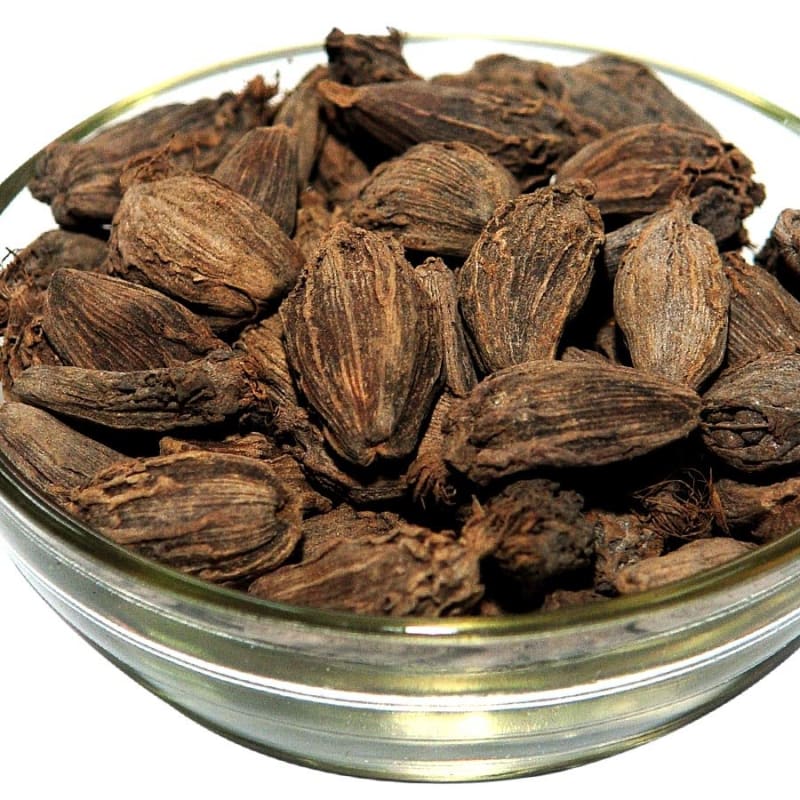
The dried seed pod of Amomum subulatum, a plant native to the eastern Himalayas. The pods are dried over fire, which gives them their characteristic smoky character. Large, dark brown, wrinkled, with a distinctly different smell from green cardamom the moment you open a jar.
Flavour & Aroma
Whole pod: Smoky, camphor-like, cooling (similar to eucalyptus or menthol), with earthy depth underneath. The smokiness comes from the drying process over fire.
Seeds inside: More concentrated version of the pod character — intensely cooling and aromatic.
Ground: Rarely used ground in Indian cooking — the camphor note can become overwhelming and medicinal when too concentrated. Almost always used whole.
The key distinction from green cardamom:
| Green cardamom | Black cardamom | |
|---|---|---|
| Character | Floral, sweet, citrusy | Smoky, cooling, earthy |
| Use | Sweet and savory | Savoury only |
| In chai | Yes | Never |
| In desserts | Yes | Never |
When to add it
- Whole in hot oil (tempering): Add with other whole spices — cinnamon, cloves, green cardamom. Lightly bruise the pod first. Blooms in 20-30 seconds in oil.
- Whole in slow-cooked meat dishes: Haleem, nihari, biryani, keema. The smokiness infuses slowly and mellows beautifully with long cooking — one of its best applications.
- Remove before serving: Like green cardamom pods, biting into a whole black cardamom pod is unpleasant. Remove or warn diners.
- Never in sweets or chai: The smoky camphor character is wrong for these contexts.
What it contributes to a dish
Smoky depth and cooling complexity. Black cardamom adds a dimension that no other spice provides — a cooling, camphor-like quality that creates contrast against the heat of chillies and the warmth of cloves and cinnamon. In a well-made biryani or nihari, it's part of what makes the spice profile feel complex and layered rather than simply hot.
It's especially effective in long-cooked meat dishes where its smokiness melds into the background and provides a mysterious depth that's hard to identify but obvious when missing.
Works well with
- Cinnamon, cloves, green cardamom — the four whole spices together form the aromatic base of Mughlai and North Indian meat cooking. They balance each other.
- Black pepper — the cooling note of black cardamom contrasts with pepper's sharp warmth.
- Lamb and beef — black cardamom has a particular affinity for red meat. Its smokiness complements the richness.
- Bay leaf — both provide background depth in slow-cooked dishes.
In blends
| Blend | Role |
|---|---|
| Garam masala | Present in most North Indian versions |
| Biryani masala | Important whole spice |
| Nihari masala | Key flavor component |
| Haleem spice mix | Background smoky depth |
Forms & Storage
Whole pods (only form used) Always used whole. Lightly bruise with the flat of a knife or between your fingers before use to let the seeds inside release aroma. Fresh pods feel slightly oily and smell strongly smoky — this is correct.
Storage: Airtight jar, 1-2 years. The smokiness fades over time — when the camphor aroma is faint, replace. Dark wrinkled pods with a strong smell = fresh. Pale, dry, faintly smelling pods = old.
Substitutes
No true substitute for the specific smoky-cooling character. In a blend, you can omit it and compensate slightly with a small amount of smoked paprika for smokiness, but the result is different. Better to simply omit if unavailable — the dish will be slightly less complex but still good.
Notes
- Two seeds vs one: green cardamom pods contain 8-18 seeds; black cardamom pods contain fewer, larger seeds. Don't confuse "2 black cardamom pods" with "2 green cardamom pods" — they're very different quantities of very different flavors.
- The camphor note: some people find black cardamom medicinal or overpowering at first. It's an acquired appreciation. Used correctly in small quantities in slow-cooked dishes, it adds complexity rather than dominating.
- Regional use: black cardamom is more prominent in North Indian (Punjabi, Mughlai) cooking than South Indian, where green cardamom dominates.
Added Aug 31, 2026 · Updated Aug 31, 2026