Bay Leaf (Tej Patta)
Bay leaf is one of the most automatically-added spices in Indian cooking — thrown in without much thought because it's always been there. Understanding what it actually does (and doesn't do) helps you use it more deliberately.
What it is
Two distinct plants are called "bay leaf" in cooking:
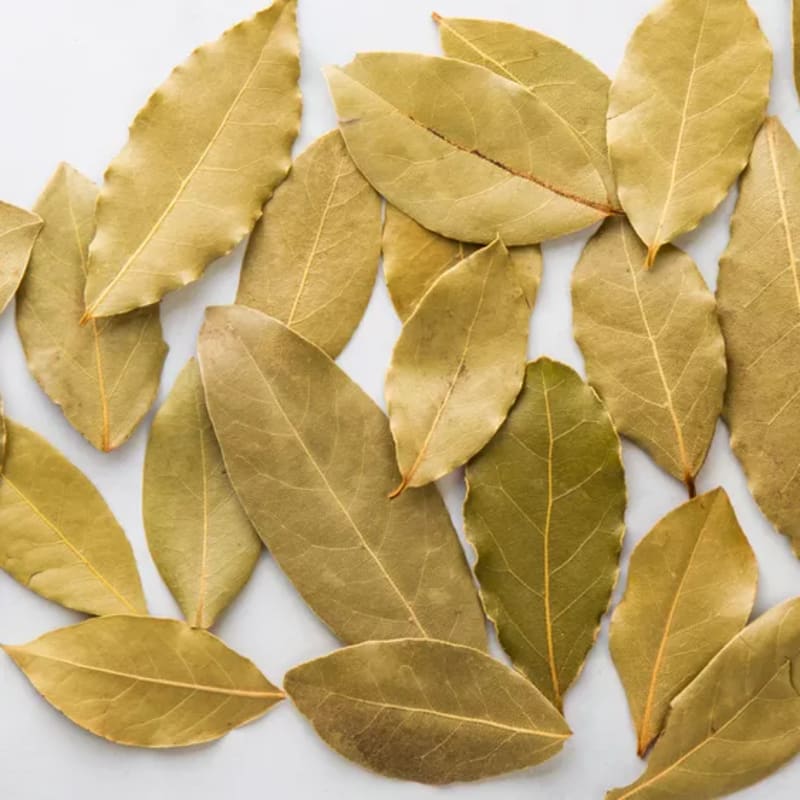
Indian bay leaf (tej patta) — Cinnamomum tamala, from the cinnamon family. Has three veins running lengthwise. Smells like cinnamon and cloves. This is the bay leaf used in Indian cooking.
Mediterranean/Turkish bay leaf — Laurus nobilis. Oval, single central vein. Smells herbal, slightly menthol-like. Used in European cooking.
They are completely different plants with different flavors. Most Indian recipes mean tej patta. Most Western supermarkets sell Mediterranean bay. They can be used interchangeably in Indian cooking — the flavor contribution is subtle enough that the difference matters less than you'd think — but they're not the same.
Flavour & Aroma
Indian bay leaf (tej patta): Warm, cinnamon-clove-like, mildly sweet. More aromatic than Mediterranean bay. Closer to cassia in character.
Mediterranean bay leaf: Herbal, slightly floral, mildly mentholated. Less sweet than tej patta.
Cooked: Both release flavor slowly in liquid or oil. The flavor infuses the dish as a background note — you rarely taste "bay" distinctly, you taste the depth it adds.
The key point: bay leaf adds background complexity rather than a pronounced flavor. It's the spice that makes a dish taste like more ingredients went into it than you can identify.
When to add it
- Whole in hot oil early in tempering: Add with other whole spices — cinnamon, cardamom, cloves. It blooms gently in oil, releasing its volatile oils.
- Whole in simmering liquid: Dals, biryanis, slow-cooked meat dishes, stocks. Infuses over long cooking. The longer it cooks, the more it contributes.
- Remove before serving: Bay leaves are not pleasant to eat. Always remove before serving or warn diners. In biryani it's traditional to leave whole spices in — bay leaves are one where removal is more important.
- One or two is enough: More bay leaves don't add proportionally more flavor. 1-2 leaves for a dish serving 4 is standard.
What it contributes to a dish
Background depth and complexity. Bay leaf is a supporting character — it doesn't define a dish's flavor but adds a layer of complexity that makes the dish taste more complete. It's one of those ingredients whose absence you notice as a vague flatness rather than a missing specific flavor.
In biryani and slow-cooked meat dishes it adds to the aromatic complexity alongside whole spices. In dal it provides a subtle herbal-warm note that rounds the earthiness of lentils.
Works well with
- Cinnamon, cloves, cardamom — the whole spice tempering group. Bay adds a herbal-warm note alongside their sweeter warmth.
- Black cardamom — both provide earthy, complex background notes in slow-cooked meat dishes.
- Onion and garlic — bay leaf infused in oil before adding aromatics deepens the base.
- Lentils and legumes — bay is a classic addition to cooking liquid for dals and beans.
In blends
Bay leaf is rarely ground into dry spice blends in Indian cooking — it's almost always used whole. Some garam masala recipes include ground tej patta, but this is less common than using whole leaves in tempering.
Forms & Storage
Dried Indian bay leaves (tej patta) The standard form. Look for larger, three-veined leaves — these are the real tej patta. Smaller oval single-vein leaves are Mediterranean bay. Both work in Indian cooking.
Fresh bay leaves More aromatic than dried but rarely available. If you have a plant, use 2-3 fresh leaves where a recipe calls for 1 dried.
Storage: Dried bay leaves in an airtight jar: 1-2 years. They lose aroma slowly over time. When they smell like dry paper rather than cinnamon-herbal, replace them.
Indian vs Mediterranean bay — does it matter?
For everyday Indian home cooking: not significantly. The difference is subtle. If you're making a dish where bay leaf is prominently featured (some Hyderabadi preparations, certain biryanis), using authentic tej patta gives a more authentic character. For dal tadka and general use, Mediterranean bay works fine.
Substitutes
- Tej patta ↔ Mediterranean bay: interchangeable in Indian cooking with minor flavor difference.
- No tej patta at all: omit entirely. Don't substitute with other herbs like basil or thyme — completely wrong character.
Notes
- The automatic addition: bay leaf is one of those spices added automatically without much thought in many Indian kitchens. Now that you know what it contributes, you can use it deliberately — or consciously choose to omit it and notice what changes.
- Bay leaves in stocks: Indian and Western cooking agree here — bay leaf is a classic stock addition for depth.
- Chewing a leaf: dry bay leaves are unpleasant to chew. The sharp edges can also cause issues if swallowed whole. Always remove before serving.
Added Aug 31, 2026 · Updated Aug 31, 2026