Asafoetida (Hing)
Asafoetida is the most pungent spice in Indian cooking and one of the most polarising. Raw, it smells like sulphur and rotting garlic — genuinely unpleasant. Cooked briefly in hot oil, it transforms into a deep, savory, onion-garlic-like aroma that enriches everything it touches. The transformation is remarkable and is the entire reason this spice exists in cooking.
What it is
The dried resin from the roots of Ferula species (giant fennel plants), native to Iran and Afghanistan. The resin is dried and ground into a powder, often cut with flour (wheat or rice) to prevent clumping. Pure hing is intensely concentrated; compounded hing (with flour) is more manageable for home use.
In Indian cooking, hing is the substitute for onion and garlic in communities that avoid alliums (Jain cooking, some Brahmin traditions). It provides the savory, allium-like depth without the ingredients themselves.
Flavour & Aroma
Raw powder: Intensely sulphurous, like garlic crossed with rotting eggs. Genuinely offensive smelling in this state. This is correct — it's supposed to smell this way.
Bloomed in hot oil (15-30 seconds): The sulphurous raw smell vanishes completely. It becomes savory, deep, onion-garlic-like with an earthy richness. The transformation is one of the most dramatic in Indian cooking — the same substance smells entirely different within seconds.
The key point: you are never eating raw hing. It is always bloomed in oil first. Judging hing by its raw smell is like judging mustard seeds by eating them raw — wrong context.
When to add it
- A pinch in hot oil, before other ingredients: The standard use. Add to hot oil or ghee after mustard seeds and cumin have bloomed. It needs 15-30 seconds of heat to transform. A small pinch goes a long way — 1/8 to 1/4 tsp is enough for most dishes.
- With lentils and beans: Hing is almost always added in dal tadka. It adds depth and is traditionally said to aid in digesting legumes (reduce gas).
- In vegetable dishes: Common in South Indian vegetable preparations and some North Indian sabzis.
- Never directly into liquid without oil blooming first: Adding raw hing powder directly to a watery dish without blooming gives a harsh, sulphurous taste.
What it contributes to a dish
Savoury depth — the allium substitute. Bloomed hing adds the kind of deep, savory background note that onion and garlic provide, but more concentrated and with a slightly different character. In Jain cooking where both are avoided, hing is essential. In everyday cooking, it adds a layer of savouriness that deepens the overall flavor.
In dal tadka specifically, hing is one of the flavors that makes it taste like dal tadka rather than just boiled lentils. A small amount does a lot.
Works well with
- Mustard seeds and curry leaves — the South Indian tadka trio. Hing joins after the seeds splutter.
- Cumin seeds — the North Indian dal tadka base: ghee + cumin + hing.
- Lentils and beans — the classic application. Hing and dal are almost inseparable in Indian cooking.
- Dried red chilli — the four together (mustard, curry leaves, hing, dried red chilli) form a complete South Indian tempering.
In blends
Hing is rarely in dry spice blends — it's almost always used fresh in tempering. Some chaat masalas and specific regional blends include tiny amounts.
Forms & Storage
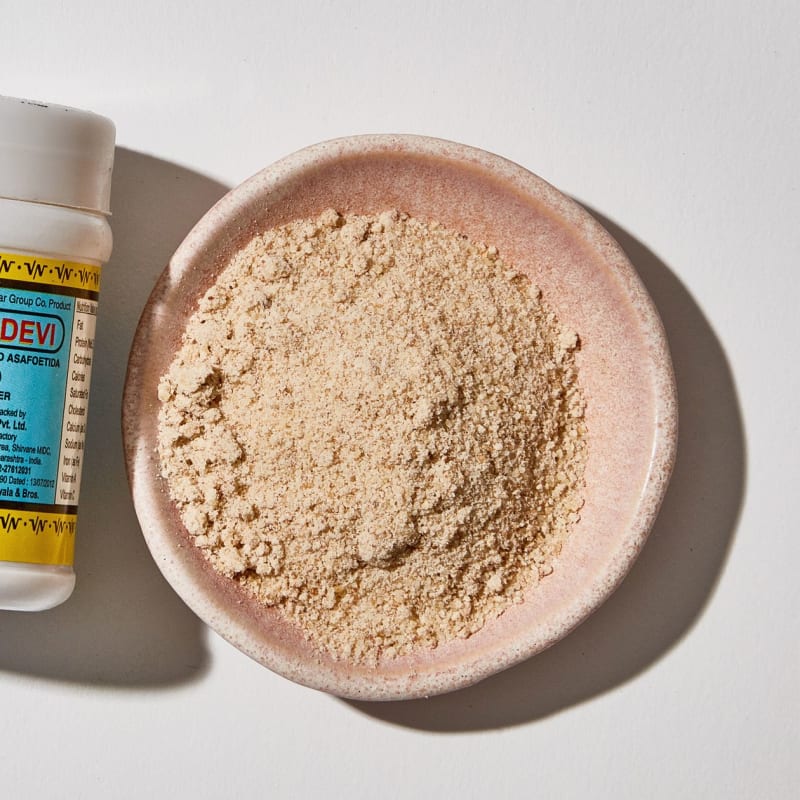
Compounded hing (standard for home use) Hing powder mixed with wheat or rice flour to prevent clumping and reduce intensity. Pale yellow, flows freely. The form most commonly available and easiest to use. Wheat-based versions are not gluten-free.
Pure hing / solid resin Much more intense — requires smaller quantities and is harder to handle. Used by some traditional cooks. Yellowish-brown solid pieces. Needs to be dissolved in oil or water before use.
Storage: Airtight, double-sealed container — the smell penetrates everything. Store in a container with a tight lid inside another container or bag. Keep away from other spices. Shelf life: 2-3 years if properly sealed.
The smell problem: hing stored improperly will make your entire spice drawer smell of sulphur. Take this seriously.
Substitutes
- Garlic + onion powder: the closest substitute in terms of flavor function. Use 1/4 tsp garlic powder + 1/4 tsp onion powder where 1/8 tsp hing is called for.
- Nothing replicates it exactly: the sulphurous-savory note of bloomed hing is unique.
Notes
- First encounter: many people encountering hing for the first time smell the jar and are put off. The smell raw is genuinely unpleasant. Trust the process — bloom it in oil and smell it then.
- Quantity discipline: hing is potent. More is not better. A pinch (1/8 tsp) is standard for a dal serving 4. Doubling this makes the dish taste medicinal.
- Gluten note: most commercial compounded hing contains wheat flour as a carrier. If cooking for someone with celiac disease or gluten intolerance, look for rice-flour-based hing or use pure hing resin.
- The digestive claim: hing has been used traditionally to reduce gas and bloating from legumes. There is some scientific support for this — the compounds in hing may inhibit enzymes that cause gas from beans.
Added Aug 31, 2026 · Updated Aug 31, 2026